Metal Barcode Labels: Materials, Barcode Types and Industrial Applications
Paper and plastic barcode stickers are suitable for many general identification applications. However, they may deteriorate when exposed to moisture, sunlight, chemicals, abrasion, heat or repeated cleaning.
Metal barcode labels provide a more durable solution for identifying and tracking machinery, tools, equipment, containers and other valuable assets. They combine machine-readable barcode technology with the strength and environmental resistance of aluminum, stainless steel and other metal materials.
Industrial buyers can customize metal barcode labels with linear barcodes, QR codes, Data Matrix codes, serial numbers, company logos, warning information and different mounting options. This makes them suitable for both basic inventory identification and complex industrial traceability systems.
This guide explains how metal barcode labels work, which materials and manufacturing methods are available, and what information buyers should prepare before requesting a quotation.
What Are Metal Barcode Labels?
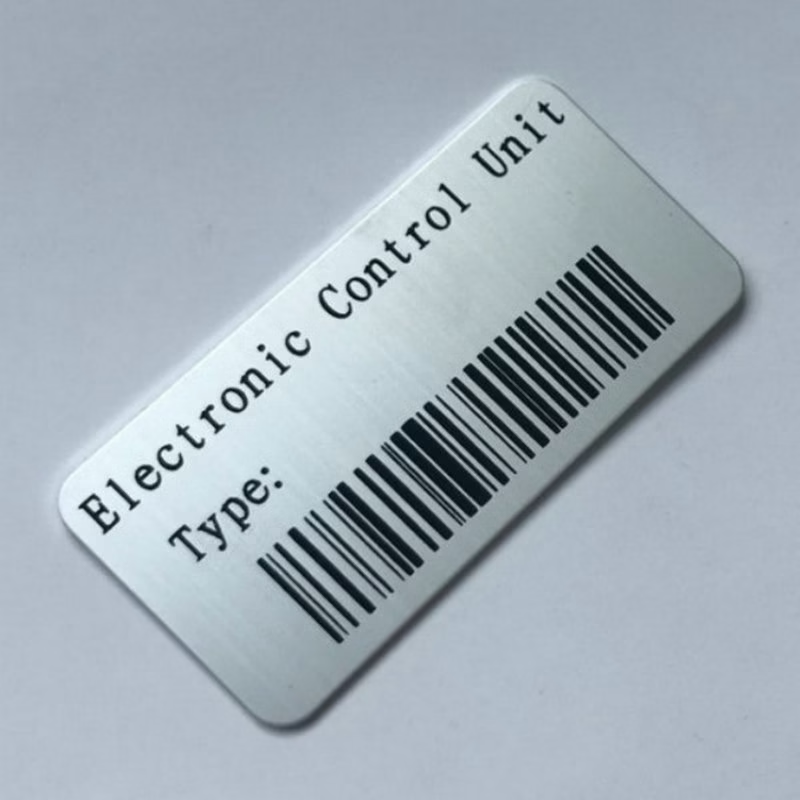
Metal barcode labels are durable identification plates or tags containing machine-readable codes. Unlike standard paper, polyester or vinyl labels, they are manufactured from aluminum, stainless steel, brass or another metal substrate.
A custom metal barcode label can include:
- Code 39 or Code 128 linear barcodes
- QR codes
- Data Matrix codes
- Unique serial numbers
- Asset identification numbers
- Model numbers and part numbers
- Company names and logos
- Safety and operating information
- Human-readable numbers and text
When the barcode is scanned, the encoded identification number connects the physical asset to information stored in an inventory, maintenance, manufacturing or enterprise resource planning system.
In most applications, the barcode contains a unique identifier rather than the complete asset record. The associated database may contain the equipment location, maintenance history, purchase date, inspection status, responsible department and replacement schedule.
Metal Barcode Labels vs. Metal Barcode Tags
The terms metal barcode labels and metal barcode tags are often used interchangeably. However, there can be an important practical difference between them.
Metal Barcode Labels
A metal barcode label is usually thin and attached directly to a smooth surface using industrial adhesive. Adhesive-backed aluminum labels are commonly installed on computers, electrical equipment, tools, control cabinets, laboratory instruments and office assets.
Metal Barcode Tags
A metal barcode tag is generally thicker and may be installed using screws, rivets, chains, wires or cable ties. Metal tags are often selected for machinery, valves, pipes, lifting equipment, reusable containers and assets without a suitable adhesive mounting surface.
The correct option depends on the installation surface, operating environment, required service life and preferred mounting method.
Why Use Metal Barcode Labels?
The main advantage of a metal barcode label is long-term readability. Paper labels can absorb moisture, tear or become dirty. Standard plastic labels may fade, shrink, peel or become damaged by solvents, sunlight and repeated abrasion.
Metal barcode labels are designed for applications where identification must remain attached and scannable for a significant part of the equipment’s operating life.
Abrasion Resistance
Properly manufactured metal labels can withstand repeated handling, cleaning and surface contact better than ordinary paper labels. The exact level of abrasion resistance depends on the selected metal and barcode-marking process.
Outdoor Durability
Anodized aluminum and stainless steel are frequently used for outdoor equipment because they resist moisture, corrosion and changing weather conditions. The required construction should be selected according to expected UV exposure, rainfall, humidity and temperature variation.
Chemical Resistance
Etched, laser-marked and properly anodized barcode labels can resist oils, cleaners, solvents and many industrial chemicals. Buyers should provide information about the chemical type, concentration, exposure duration and cleaning procedure before production.
Temperature Resistance
Metal generally performs better than ordinary paper and plastic labels in elevated-temperature environments. However, the adhesive, printing ink, paint filling or protective coating may have a lower temperature limit than the metal substrate.
Permanent Asset Identification
Metal labels are difficult to tear or remove accidentally. They are widely used for high-value machinery, equipment and tools that must remain identifiable during maintenance, audits, ownership transfers and long-term operation.
Common Materials for Metal Barcode Labels
Material selection affects corrosion resistance, appearance, weight, price, marking quality and expected service life.
| Material | Main Advantages | Common Applications |
|---|---|---|
| Anodized aluminum | Lightweight, corrosion resistant and suitable for variable data | Asset tracking, electronics, machinery, tools and outdoor equipment |
| Stainless steel | Excellent resistance to abrasion, chemicals, heat and corrosion | Heavy machinery, marine, chemical and food-processing equipment |
| Printed aluminum | Supports multiple colors, logos and detailed graphics | Indoor equipment, control panels and branded identification |
| Brass | Premium gold-colored appearance | Furniture, instruments and decorative equipment plates |
Anodized Aluminum Barcode Labels
Anodized aluminum is one of the most popular materials for industrial barcode and asset labels. It is lightweight, corrosion resistant and suitable for detailed barcodes, company logos, serial numbers and variable data.
With certain anodized-printing processes, the barcode image is sealed within the anodized surface rather than remaining only on top of the metal. This helps protect the code from fading, solvents and surface abrasion.
Anodized aluminum barcode labels are commonly used for:
- Industrial asset tracking
- Computers and electronic equipment
- Production machinery
- Electrical control panels
- Laboratory equipment
- Warehouse inventory
- Outdoor equipment
- Tools and measuring instruments
Stainless Steel Barcode Labels
Stainless steel offers excellent mechanical strength and resistance to corrosion, chemicals, heat and frequent cleaning.
It is often selected for demanding industries such as:
- Food-processing equipment
- Chemical plants
- Marine equipment
- Oil and gas facilities
- Medical equipment
- Heavy machinery
- Outdoor infrastructure
- High-temperature manufacturing
Barcodes can be laser marked, chemically etched or printed onto stainless steel. For severe operating conditions, laser marking or chemical etching generally provides better durability than surface-only printing.
Printed Aluminum Barcode Labels
Printed aluminum labels are a cost-effective option for indoor equipment and moderately demanding environments.
Screen printing and digital printing can reproduce multiple colors, detailed graphics, warning symbols and branding elements. A clear protective coating or laminate may be added to improve resistance to moisture, UV exposure and abrasion.
Brass Barcode Labels
Brass is less common for industrial asset tracking but may be selected when appearance is important. It provides a traditional gold-colored finish and is suitable for premium equipment, furniture, instruments and decorative identification plates.
Because untreated brass may oxidize or tarnish, buyers should specify the required surface finish, protective coating and operating environment.
Which Barcode Type Should You Choose?
The correct barcode format depends on the amount of encoded data, available label size, scanner type, scanning distance and existing database system.
Code 39
Code 39 is frequently used for industrial identification, inventory and asset tracking. It can encode numbers, uppercase letters and selected special characters.
It is widely supported and relatively simple, but it normally requires more horizontal space than some other linear barcode formats.
Code 128
Code 128 can encode a large amount of alphanumeric information in a compact linear barcode. It is often used for logistics, manufacturing, shipping, serial numbers and internal inventory systems.
QR Codes
A QR code is a two-dimensional barcode that can store more information than a standard linear barcode. It can usually be read by smartphones and compatible industrial scanners.
QR codes can connect users to:
- Equipment manuals
- Maintenance records
- Product registration pages
- Inspection reports
- Installation instructions or videos
- Spare-parts information
- Online asset databases
Data Matrix Codes
A Data Matrix code is another two-dimensional barcode format. It can store substantial information within a small area, making it suitable for compact components, industrial traceability and direct part identification.
Data Matrix codes are frequently used when manufacturers need to encode multiple data fields, such as an item number, serial number, batch number or production date.
| Barcode Type | Best Used For | Main Consideration |
|---|---|---|
| Code 39 | General industrial identification and asset tracking | Requires more horizontal space |
| Code 128 | Compact alphanumeric identification | Requires compatible scanning software |
| QR code | Web links, maintenance records and smartphone scanning | Code size depends on the amount of data |
| Data Matrix | Small components and industrial traceability | Usually requires an image-based scanner |
How Are Barcodes Added to Metal Labels?
Different manufacturing methods provide different levels of durability, contrast, detail and visual flexibility.
Laser Engraving and Laser Marking
Laser technology creates a permanent mark on the metal without applying a separate printed sticker.
Advantages include:
- Precise variable data
- Permanent identification
- Good abrasion resistance
- High-resolution text and codes
- No ink layer that can peel away
Final barcode contrast depends on the metal alloy, surface finish and laser process. A scanning test should be completed before mass production when readability is critical.
Chemical Etching
Chemical etching creates recessed graphics in the metal surface. The recessed areas can be filled with paint to improve contrast.
Etched metal barcode labels are suitable for harsh environments because the information remains physically recessed even if part of the paint or surface finish becomes worn.
Anodized Printing
Anodized printing places the barcode image within or beneath the porous anodized layer before the surface is sealed.
This process is commonly used for durable aluminum asset labels because it combines detailed imaging with good resistance to weather, chemicals, fading and abrasion.
Screen Printing
Screen printing is suitable for bold colors, company logos, warning information and high-volume production. A protective coating can improve durability, although performance depends on the ink system, surface preparation and operating environment.
Digital Printing
Digital printing supports detailed graphics, multiple colors and variable data. It is useful for customized metal labels with changing serial numbers or barcode information.
For demanding industrial applications, the printed image may require a protective laminate or clear coating.
How to Maintain Barcode Scan Reliability
A durable metal plate is not automatically a reliable barcode label. The barcode must also be designed, manufactured and positioned correctly.
Maintain Strong Contrast
Black codes on a white, silver or light-colored background are commonly used because they provide clear contrast.
Highly reflective metal can create glare under certain lighting conditions. A matte, brushed or treated background may improve scanner performance.
Leave a Clear Quiet Zone
Every barcode requires a blank area around the symbol. This space is known as the quiet zone.
Logos, text, borders, mounting holes and label edges should not interfere with this area. The required quiet zone depends on the barcode format and code dimensions.
Avoid Making the Barcode Too Small
Adding more encoded information increases barcode density. If too much data is compressed into a small label, the code may become difficult to scan.
Before confirming the barcode size, consider:
- The amount of encoded data
- The required scanning distance
- Scanner resolution
- Surface curvature
- Lighting conditions
- Quiet-zone requirements
- Manufacturing tolerances
Test the Actual Scanner
A smartphone, warehouse scanner and long-range industrial scanner may not provide the same results.
The barcode should be tested using the equipment that will be used in the final application. Testing is particularly important for small codes, reflective surfaces, curved installations and long scanning distances.
Protect the Label From Physical Damage
Whenever possible, install the label away from areas exposed to direct impact, scraping, welding spatter, excessive paint, accumulated dirt or concentrated chemical contact.
Common Applications of Metal Barcode Labels
Machinery and Production Equipment
Manufacturers use barcode labels to connect machinery with service histories, inspection records, operating instructions, production data and spare-parts information.
Tools and Instruments
Unique barcode numbers help companies issue, return, audit and maintain tools used by employees, technicians and contractors.
Electrical Equipment
Metal barcode plates can identify control cabinets, electrical panels, generators, motors, transformers and other powered equipment.
Warehouse and Logistics Systems
Metal tags can identify reusable containers, pallets, racks, bins, carts and material-handling equipment. Aluminum and stainless steel tags are suitable for warehouse assets that require repeated use.
Outdoor Assets
Utility equipment, construction machinery, agricultural equipment, telecommunications hardware and public infrastructure may require labels that tolerate sunlight, rain, humidity and temperature changes.
Medical and Laboratory Equipment
Barcode labels can support equipment inventory, maintenance schedules and calibration records. Material and adhesive selection should account for sanitation procedures and cleaning chemicals.
Aerospace, Defense and Transportation
These industries often require long-term component traceability and may specify particular barcode formats, material standards, verification grades or identification requirements.
Adhesive or Mechanical Mounting?
A metal barcode label must remain securely attached throughout its intended service life. The best mounting method depends on the asset surface and working environment.
Industrial Adhesive
Pressure-sensitive adhesive is suitable for smooth, clean and relatively flat surfaces. Adhesive-backed labels are quick to install and do not require drilling.
Adhesive performance can be affected by:
- Dust and dirt
- Oil and grease
- Rough surface textures
- Low-surface-energy plastics
- Powder-coated surfaces
- Strong surface curvature
- High temperatures
- Chemical exposure
The installation surface should be thoroughly cleaned and dried before the label is applied.
Mounting Holes
Metal barcode plates can be supplied with round holes, slots or custom hole patterns for screws and rivets.
Mechanical mounting is recommended when:
- The surface is rough or uneven
- The equipment produces strong vibration
- High temperatures may weaken the adhesive
- The label will be exposed outdoors
- The equipment is frequently washed or cleaned
- A permanent attachment method is required
Wire, Chain or Cable Ties
Hanging barcode tags are useful for valves, pipes, hoses, cables and equipment that does not have a suitable flat mounting surface.
What Information Is Needed for a Quotation?
A complete request for quotation helps the metal label manufacturer recommend the correct construction and calculate an accurate price.
Provide the following information whenever possible:
- Label dimensions
- Metal material
- Material thickness
- Required quantity
- Barcode format
- Encoded data
- Sequential or variable numbering requirements
- Background and image colors
- Company logo or fixed artwork
- Surface finish
- Adhesive or mounting-hole requirements
- Indoor or outdoor application
- Operating temperature range
- Chemical exposure
- Required service life
- Applicable industry standards
- Preferred packaging method
Variable barcode data can normally be supplied in an Excel or CSV file. Vector files such as AI, EPS, CDR or editable PDF are preferred for logos and fixed graphics.
The numbering database should be carefully checked before production because every barcode must correspond with the correct human-readable number.
Questions to Ask Before Ordering Metal Barcode Labels
- Can the proposed barcode be scanned at the required distance?
- Is the material suitable for the operating environment?
- Will the adhesive bond to the actual equipment surface?
- Can every label contain different variable data?
- Are pre-production samples available?
- Can barcode readability be tested before production?
- Can the labels be packed in numerical order?
- Which artwork and database file formats are accepted?
- Are special barcode standards or verification reports required?
A physical sample should be installed on the actual equipment whenever adhesive performance, barcode size, surface reflection or environmental resistance is uncertain.
Custom Metal Barcode Labels From C.N.Nameplate
C.N.Nameplate manufactures custom metal barcode labels for industrial identification, equipment tracking, inventory control and asset-management applications.
Available customization options include:
- Anodized aluminum, stainless steel and brass
- Code 39, Code 128 and other linear barcodes
- QR codes and Data Matrix codes
- Sequential serial numbers
- Variable asset numbers and text
- Company logos and fixed product information
- Custom sizes, shapes and thicknesses
- Rounded or square corners
- Industrial adhesive backing
- Mounting holes and slots
- Printed, etched and laser-marked graphics
- Prototype samples and bulk production
Each label can be designed according to the equipment surface, scanning system, installation method and operating environment.
For an accurate quotation, send your drawing, required quantity, barcode database, material preference and application conditions. Our team will review the specifications and recommend a suitable metal barcode label construction.
Frequently Asked Questions About Metal Barcode Labels
Are metal barcode labels waterproof?
The metal substrate is water resistant, but complete performance depends on the material, marking method, adhesive and mounting system. Anodized aluminum and stainless steel are commonly used in wet and outdoor environments.
Can every label have a different barcode?
Yes. Each label can include a unique serial number, asset number, QR code, Data Matrix code or other customer-provided variable data.
What is the best material for metal barcode labels?
Anodized aluminum is suitable for most general asset-tracking applications. Stainless steel is normally preferred for severe abrasion, chemical exposure, high temperatures or heavy industrial use.
Can metal barcode labels be used outdoors?
Yes. The material, marking process, adhesive and protective finish must be selected according to expected sunlight, rainfall, humidity and temperature changes.
Can a logo and text be added beside the barcode?
Yes. Logos, warnings, model numbers, contact information and human-readable serial numbers can be included, provided sufficient blank space remains around the barcode.
Can metal barcode labels be installed on curved surfaces?
Thin aluminum labels may conform to a gentle curve. Rigid metal plates are better suited to flat surfaces. For strongly curved or irregular equipment, a hanging tag or mechanically mounted plate may be more reliable.
Should I choose a QR code or a linear barcode?
Choose a linear barcode for simple identification and compatibility with traditional laser scanners. Select a QR code or Data Matrix code when more data, a compact symbol or smartphone scanning is required.
Do I need a sample before mass production?
A sample is strongly recommended when barcode size, scanner compatibility, surface reflection, adhesive performance or environmental resistance is critical.
What file formats are required?
Vector artwork in AI, EPS, CDR or editable PDF format is preferred. Variable barcode and serial-number data can normally be supplied in Excel or CSV format.
How long do metal barcode labels last?
Service life depends on the metal, marking process, installation method and operating environment. Properly specified anodized aluminum and stainless steel barcode labels can remain readable for many years.
Conclusion
Metal barcode labels provide a reliable way to identify and track valuable assets in environments where ordinary stickers may not last.
The best label is not simply the thickest or most expensive option. It is the label that matches the asset surface, operating environment, scanner, encoded data and expected service life.
By selecting the correct metal, marking process, barcode format and mounting method, companies can improve inventory control, simplify maintenance and keep equipment information readable throughout years of industrial use.
“`