Laser Engraving for Metal Nameplates: Materials, Benefits and Design Guide
Laser engraving is one of the most reliable methods for creating permanent identification on metal nameplates. It can produce sharp text, detailed logos, serial numbers, barcodes, QR codes, warning messages and technical specifications without using printing plates or physical engraving tools.
For equipment manufacturers, industrial companies, electrical contractors and OEM buyers, laser-engraved metal nameplates offer an effective combination of durability, accuracy, customization and production efficiency.
This guide explains how laser engraving for metal nameplates works, which metals are suitable, what finishes and mounting options are available, and how to prepare a clear specification for production.
What Is Laser Engraving on Metal?
Laser engraving is a computer-controlled marking process that uses a focused laser beam to alter the surface of a metal plate.
Depending on the material, laser type, power setting and required appearance, the laser can:
- Remove a thin layer of metal
- Vaporize part of the metal surface
- Create a recessed engraved mark
- Produce a dark oxidized mark
- Remove anodizing, paint or another coating
- Expose a contrasting layer beneath the surface
- Anneal stainless steel without deeply removing material
Because the laser follows a digital artwork file, it can reproduce fine text, logos and variable data with excellent consistency.
Unlike ordinary surface printing, laser engraving does not depend entirely on ink adhesion. The information is created directly on or within the metal surface, reducing the risk of peeling, cracking or fading during normal use.
Why Use Laser Engraving for Metal Nameplates?
Laser engraving is widely used for industrial nameplates because it provides several practical advantages.
Permanent Product Identification
Laser-engraved information is difficult to remove under normal operating conditions. It is suitable for products that require long-term traceability, operating instructions, safety information or regulatory identification.
High Engraving Precision
Modern laser systems can produce small text, narrow lines, detailed logos and machine-readable identification codes. This makes the process suitable for large machinery plates as well as compact labels for electronics and instruments.
Variable Data Capability
Every nameplate can contain different information without requiring a separate printing screen, mold or engraving plate.
Common variable data includes:
- Sequential serial numbers
- Model and part numbers
- Batch and lot codes
- Production dates
- Asset identification numbers
- Barcodes
- QR codes
- Data Matrix codes
- Customer-specific technical information
This capability is particularly useful for asset tags, machinery nameplates, control panel labels and serialized OEM products.
Efficient Production for Different Quantities
Laser engraving can be used for prototypes, replacement plates, small orders and large repeat-production projects. Because the artwork is digitally controlled, manufacturers can also produce several designs or data variations within the same order.
No Printing Plate Required
The process normally does not require screens, printing plates or mechanical engraving cutters. This can reduce setup requirements and make artwork revisions easier before production.
Best Metals for Laser-Engraved Nameplates
Different metals react to laser energy in different ways. Material selection should be based on the required appearance, environment, strength, corrosion resistance and budget.
Anodized Aluminum Nameplates
Anodized aluminum is one of the most popular materials for laser-engraved nameplates.
During engraving, the laser removes or modifies the anodized surface layer to create a contrasting mark. Depending on the anodized color and laser settings, the engraved information may appear silver, white, light gray or dark.
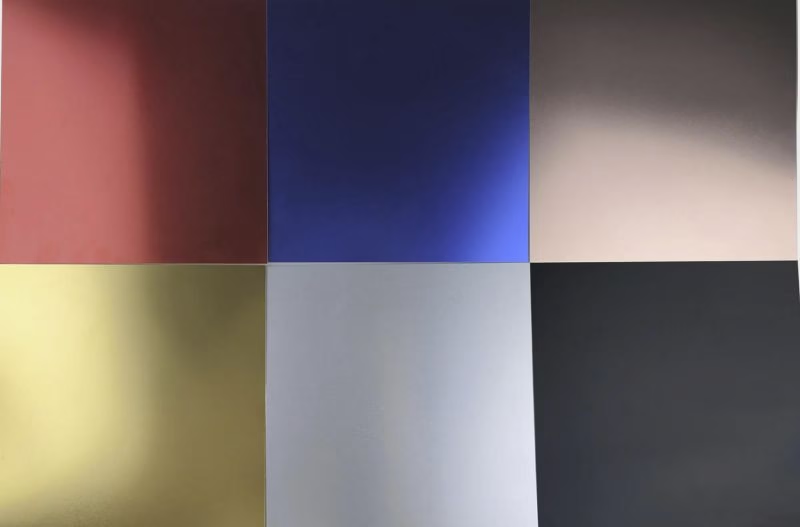
Common anodized aluminum colors include:
- Black
- Natural silver
- Blue
- Red
- Gold
- Green
Black anodized aluminum is particularly popular because laser engraving can create highly visible silver or light-colored text against the dark background.
Advantages of Laser-Engraved Anodized Aluminum
- Lightweight construction
- Good corrosion resistance
- Clear engraving contrast
- Suitable for sequential numbering
- Compatible with QR codes and barcodes
- Available in multiple colors and thicknesses
- Easy to cut into custom shapes
- Cost-effective for volume production
Laser-engraved anodized aluminum nameplates are commonly used on machinery, electrical equipment, tools, appliances, instruments, control panels and asset-tracking systems.
Stainless Steel Nameplates
Stainless steel is selected when mechanical strength, corrosion resistance, heat resistance or a premium metallic appearance is required.
Laser processing on stainless steel can create:
- Dark annealed markings
- Light-colored surface markings
- Recessed engraving
- Engraving combined with paint filling
- High-contrast marks on brushed or coated surfaces
304 Stainless Steel
Grade 304 stainless steel is suitable for many indoor and outdoor industrial environments. It is commonly used for machinery plates, electrical cabinets, pumps, valves, production equipment and industrial control systems.
316 Stainless Steel
Grade 316 stainless steel contains molybdenum, which provides improved resistance to saltwater, chlorides and certain aggressive industrial environments.
It is frequently specified for:
- Marine equipment
- Coastal installations
- Chemical-processing plants
- Food-processing machinery
- Pharmaceutical equipment
- Offshore applications
- Equipment exposed to frequent washdown
Stainless steel is heavier and usually more expensive than aluminum, but it offers greater rigidity, impact resistance and environmental durability.
Brass Nameplates
Laser-engraved brass nameplates provide a decorative and traditional appearance. They are often used for premium branding, furniture, office doors, instruments, awards, control panels and architectural identification.
The engraving can be left in its natural condition or filled with paint to improve contrast. Because unprotected brass gradually develops a patina, buyers should specify whether they prefer natural aging or a polished finish protected by clear lacquer.
Painted and Powder-Coated Metal
A laser can remove selected areas of paint, powder coating or another surface finish to expose the metal underneath. This creates a clean contrast between the outer coating and the base material.
This method is often used for control panels, switch plates, equipment labels and decorative branding plates. The final appearance depends on the coating composition, thickness, base material and laser parameters.
Laser Engraving, Laser Marking and Laser Annealing
The terms laser engraving, laser marking and laser annealing are sometimes used interchangeably, but they describe different effects on the metal surface.
| Process | Effect on the Surface | Typical Result |
|---|---|---|
| Laser engraving | Removes material from the metal surface | Permanent recessed mark |
| Laser marking | Changes or removes a thin surface layer | High-contrast surface mark |
| Laser annealing | Changes the metal color through controlled heating | Dark mark with minimal material removal |
| Laser ablation | Removes anodizing, paint or coating | Exposes the contrasting material underneath |
For most industrial buyers, the important factors are not only the technical name of the process. Readability, contrast, engraving depth, corrosion resistance and service environment should determine the final production method.
Common Applications of Laser-Engraved Metal Nameplates
Laser-engraved nameplates are used across a wide range of industries and products.
Machinery and Equipment Identification
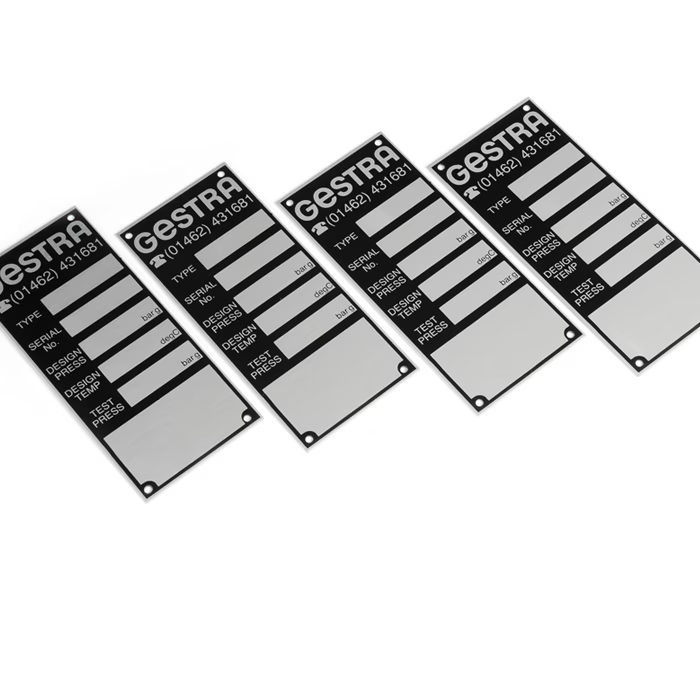
Industrial machine nameplates may include:
- Manufacturer name and logo
- Equipment model
- Serial number
- Voltage and current
- Power rating
- Operating pressure
- Production date
- Safety warnings
- Certification information
- Maintenance instructions
Electrical Panel Nameplates
Laser engraving is used for switch labels, circuit identification plates, control cabinet labels, warning plates and electrical schematic references.
Clearly engraved text can remain readable during installation, maintenance and repeated cleaning.
Metal Asset Tags
Serialized aluminum or stainless steel asset tags help companies identify and track computers, tools, laboratory equipment, machinery and other valuable assets.
An asset tag can include a company logo, asset number, barcode, QR code and return instructions.
Valve and Pipe Identification
Laser-engraved valve tags can identify valve numbers, system functions, pipe contents and operating instructions. Stainless steel, brass and anodized aluminum are commonly used for these applications.
Automotive and Transportation Equipment
Laser-engraved plates are used to identify automotive components, trailers, control systems, specialized vehicles, aftermarket products and transportation equipment.
Marine and Outdoor Equipment
Marine and outdoor products require materials that can withstand moisture, rain, ultraviolet exposure, temperature changes and, in some cases, salt spray. Grade 316 stainless steel is frequently selected for severe coastal and marine environments.
Electronics and Appliances
Compact laser-engraved labels can display product models, electrical ratings, certification symbols, manufacturing codes, safety information and operating instructions.
Can QR Codes and Barcodes Be Laser Engraved?
Yes. Laser engraving is suitable for QR codes, Data Matrix codes and many one-dimensional barcodes.
However, reliable scanning depends on several factors:
- Adequate contrast between the code and background
- Correct code dimensions
- Sufficient quiet zone around the code
- Suitable module or cell size
- A flat and consistent plate surface
- Accurate source data
- Appropriate scanning distance
- Controlled laser settings
- Suitable lighting conditions
Before approving mass production, the engraved code should be tested with the intended scanner, mobile device or industrial reading system.
Vector artwork or properly generated code data is preferable to a low-resolution screenshot. Poor-quality source files can create distorted edges and reduce scan reliability.
How Durable Are Laser-Engraved Metal Nameplates?
The durability of a laser-engraved nameplate depends on the material, marking method, engraving depth, surface finish and operating environment.
A properly specified metal nameplate may provide resistance to:
- Ultraviolet exposure
- Water and humidity
- Oils and lubricants
- Mild chemicals
- Temperature changes
- Routine industrial cleaning
- Moderate abrasion
- Outdoor weather conditions
No nameplate material or engraving process is universally resistant to every chemical, cleaning agent or mechanical condition. Buyers should provide complete environmental information before selecting a material.
Important details include:
- Indoor or outdoor installation
- Expected service life
- Minimum and maximum temperature
- Chemical exposure
- Cleaning products and methods
- Saltwater or chloride exposure
- Expected abrasion level
- Required corrosion resistance
- Installation surface
This information helps determine whether anodized aluminum, 304 stainless steel, 316 stainless steel, brass or another material is appropriate.
Surface Finish Options
Laser-engraved metal nameplates can be produced with different surface finishes to achieve the required appearance and readability.
Brushed Finish
A brushed surface has fine directional lines and a clean industrial appearance. It is widely used for stainless steel and aluminum equipment plates.
Polished Finish
Polished metal creates a reflective appearance suitable for decorative branding, furniture, architectural products and premium equipment.
Matte Finish
A matte surface reduces glare and can improve readability under bright lighting or outdoor conditions.
Anodized Finish
Anodizing improves the surface corrosion resistance of aluminum and provides a colored background for high-contrast laser engraving.
Painted or Powder-Coated Finish
The laser removes selected areas of the coating to expose the metal underneath. This creates clear graphics without requiring additional ink in the engraved areas.
Paint-Filled Engraving
Recessed engraved areas can be filled with paint to improve visibility or match a specified color. Paint filling is useful when the natural contrast between the engraved area and metal surface is insufficient.
Custom Shapes, Sizes and Thicknesses
Laser-engraved nameplates are not limited to standard rectangles. They can be manufactured in many different profiles, including:
- Rectangular plates
- Square plates
- Round tags
- Oval plates
- Custom-cut profiles
- Plates with rounded corners
- Plates with mounting holes
- Plates with slots and cut-outs
- Control panels with multiple openings
The outer profile may be produced by laser cutting, CNC machining, stamping, punching or die cutting. The most suitable method depends on the material, thickness, dimensional tolerance and order quantity.
Common nameplate thicknesses range from approximately 0.3 mm to 3 mm, although thinner and thicker materials are available for specialized applications.
Mounting Options for Metal Nameplates
The mounting method should be selected according to the installation surface, environment, plate size and expected service life.
Industrial Adhesive Backing
Pressure-sensitive adhesive allows the nameplate to be installed without drilling holes. The adhesive specification should consider surface energy, texture, temperature, moisture and chemical exposure.
Mounting Holes
Round holes or slots allow the plate to be installed with screws, bolts or rivets. The hole diameter, edge distance and position should be shown clearly on the technical drawing.
Rivet Mounting
Rivets provide a secure mechanical installation for machinery, equipment frames and industrial panels.
Frames and Holders
Some plates are inserted into metal holders or identification frames. This arrangement allows the nameplate to be removed and replaced when equipment data changes.
Blank Back
A nameplate can also be supplied without adhesive or holes for welding, insertion into a recessed area, or installation using the customer’s own fastening system.
How to Prepare Artwork for Laser Engraving
Clear and accurate artwork is essential for obtaining a consistent engraving result.
Vector artwork formats are normally preferred, including:
- AI
- EPS
- SVG
- CDR
- DXF
Text should be converted to outlines or curves to prevent missing-font or font-substitution problems.
The artwork or technical drawing should clearly indicate:
- Finished plate dimensions
- Material and metal grade
- Material thickness
- Surface finish
- Engraving content
- Engraving depth, when required
- Hole diameter and position
- Corner radius
- Adhesive requirement
- Serial number sequence
- Barcode or QR code data
- Quantity
- Required dimensional tolerance
Variable data can usually be supplied in an Excel or CSV file. Each row should correspond to one nameplate or one variable-data record.
Design Tips for Better Readability
- Use a clear font with sufficient stroke width.
- Avoid placing text too close to the edge of the plate.
- Maintain strong contrast between the engraved information and background.
- Use larger text for warnings and safety-critical information.
- Do not make QR codes or barcodes unnecessarily small.
- Leave sufficient clear space around machine-readable codes.
- Select a matte or brushed finish where glare may affect readability.
- Test a sample under actual lighting and viewing conditions.
- Confirm that screws, rivets or mounting frames will not cover important information.
- Select a corrosion-resistant material for outdoor, marine or chemical environments.
- Avoid excessively thin lines that may become unclear after engraving.
- Verify all variable data before approving mass production.
Laser Engraving vs. Screen Printing
Laser engraving and screen printing are both commonly used for metal nameplates, but they are suited to different requirements.
| Feature | Laser Engraving | Screen Printing |
|---|---|---|
| Variable serial numbers | Excellent | Limited |
| Full-color graphics | Limited | Excellent |
| Resistance to peeling | Excellent | Depends on ink and surface preparation |
| Small-order setup | Efficient | May require screen preparation |
| Recessed markings | Possible | Not possible |
| Multiple colors | Limited | Suitable |
| Detailed variable data | Excellent | Less efficient |
Laser engraving is generally preferred for permanent identification and variable information. Screen printing may be more suitable for multiple brand colors, large solid-color areas and decorative graphics.
Both processes can also be combined. For example, a company logo and warning colors may be screen printed, while the serial number and QR code are laser engraved.
Laser Engraving vs. Chemical Etching
Chemical etching removes metal through a controlled chemical process. It can create fine recessed details and is often combined with paint filling.
Laser engraving offers efficient digital customization and is especially suitable for variable data. Chemical etching may be preferred for traditional industrial plates requiring recessed graphics, permanent color filling or a specific etched appearance.
The correct process depends on the metal, design complexity, engraving depth, order quantity and service environment.
Factors That Affect the Price
The price of laser-engraved metal nameplates is influenced by several production factors:
- Material type and grade
- Metal thickness
- Finished plate dimensions
- Surface finish
- Engraving area
- Engraving depth and processing time
- Number of mounting holes
- Custom cutting requirements
- Adhesive backing
- Paint filling
- Variable data requirements
- Dimensional tolerances
- Packaging method
- Total order quantity
An accurate quotation normally requires a drawing, artwork file and complete product specifications.
Information to Include in Your RFQ
Providing complete information helps the manufacturer recommend the correct material and quote the project accurately.
- Material: aluminum, stainless steel, brass or another metal
- Metal grade, such as 304 or 316 stainless steel
- Finished dimensions
- Material thickness
- Surface finish
- Engraving artwork
- Fixed or variable information
- Order quantity
- Mounting holes, adhesive or other installation method
- Indoor or outdoor use
- Temperature and chemical exposure
- Required corrosion and abrasion resistance
- Packaging requirements
- Delivery destination
A reference photograph can help explain the desired appearance, but a dimensioned drawing is normally required before production.
Frequently Asked Questions
Is laser engraving permanent on metal?
Laser engraving is generally considered permanent because the information is formed by removing or altering the metal surface. Actual durability depends on the material, marking method, engraving depth and application environment.
Can every nameplate have a different serial number?
Yes. Sequential serial numbers, asset numbers, model numbers, dates, barcodes and QR codes can be produced from a variable-data file.
What is the best metal for outdoor nameplates?
Anodized aluminum, 304 stainless steel and 316 stainless steel are common choices. Grade 316 stainless steel is often preferred for marine, coastal and chloride-rich environments.
Can color be added to laser-engraved nameplates?
Yes. Color can be added through anodized finishes, paint filling, screen printing, digital printing or colored surface coatings. The best option depends on the design and durability requirement.
What thickness should a metal nameplate have?
Common thicknesses range from approximately 0.3 mm to 3 mm. The appropriate thickness depends on the plate dimensions, required rigidity, installation method and operating environment.
Can a company logo be laser engraved?
Yes. Company logos, symbols and detailed graphics can be engraved. Vector artwork is recommended to maintain sharp edges and accurate proportions.
Are laser-engraved QR codes scannable?
Yes, provided the QR code has sufficient contrast, correct proportions, an adequate quiet zone and suitable engraving quality. A production sample should be tested before approving a large order.
Is laser engraving suitable for small quantities?
Yes. Because the process uses digital artwork, it is suitable for prototypes, replacement plates, small customized orders and large production runs.
Can mounting holes be added?
Yes. Round holes, slots, corner holes and custom cut-outs can be produced according to the technical drawing.
Can protective film be applied?
Many metal nameplates can be supplied with a temporary protective film to reduce scratching during fabrication, transportation and installation. The protective film should normally be removed after installation.
Conclusion
Laser engraving provides a precise and durable solution for metal nameplates that require permanent text, logos, serial numbers, barcodes, QR codes and technical information.
Anodized aluminum offers excellent contrast, low weight and cost efficiency. Stainless steel provides greater mechanical strength, heat resistance and environmental durability. Brass is suitable for decorative, architectural and premium identification applications.
The best result depends on selecting the correct metal, surface finish, engraving process, artwork and mounting method. Providing complete application details before production helps ensure that the finished nameplate remains readable and reliable throughout its intended service life.
Custom Laser-Engraved Metal Nameplates
C.N.Nameplate manufactures custom laser-engraved aluminum, stainless steel and brass nameplates for machinery, electrical panels, industrial equipment, asset tracking, product branding and OEM applications.
Available customization options include:
- Custom sizes and shapes
- 304 and 316 stainless steel
- Colored anodized aluminum
- Brushed, polished and matte finishes
- Sequential serial numbers
- QR codes and barcodes
- Logos and technical information
- Mounting holes and custom cut-outs
- Industrial adhesive backing
- Prototype and bulk OEM production
Send your artwork, dimensions, material requirements, quantity and application details to receive a quotation for your custom laser-engraved metal nameplates.