Industrial Equipment Identification Guide
Equipment Nameplate Requirements and Standards
Equipment nameplates provide essential identification, technical and safety information for machinery and industrial equipment. Depending on the equipment type, market and applicable standard, a nameplate may need to show information such as the manufacturer, model, serial number, electrical ratings, operating limits or conformity markings.
There is no single universal nameplate requirement that applies to every machine. The required information depends on the equipment, jurisdiction and applicable product or safety standard.
This guide explains how to determine the information, material, marking method, placement and durability requirements for an industrial equipment nameplate.
Need Custom Equipment Nameplates?
If you already know your material, dimensions and required nameplate information, see our commercial manufacturing page for material options, marking methods, serial numbers, QR codes, barcodes and quotation details.
View Custom Equipment Nameplates
What Is an Equipment Nameplate?
An equipment nameplate is a permanent identification plate or label attached to machinery, electrical equipment or another industrial product. It provides information that allows users, technicians, inspectors or asset managers to identify the equipment and understand key operating or rating data.
Depending on the application, similar terms may include data plate, rating plate, identification plate, machine plate or equipment ID plate.
The exact information required on the plate should be determined from the equipment design, destination market and the standards or regulations that apply to that specific product.
Why Equipment Nameplates Are Required?
1. Regulatory Compliance
Regulatory bodies such as OSHA, ANSI, NEC (National Electrical Code), UL, and ISO require certain information to be displayed on industrial equipment. Without compliant nameplates, your equipment may fail inspections or certifications.
2. Safety
Nameplates provide operators with essential safety information, reducing the risk of misuse, electrical shock, or injury.
3. Traceability
Serial numbers and barcodes help businesses track maintenance schedules, warranties, and asset histories.
4. Branding & Professionalism
A professionally designed nameplate with your logo reinforces trust and brand presence.
5. Liability Protection
Accidents involving improperly labeled equipment can expose companies to legal and financial risks.
Regulatory Standards Governing Equipment Nameplates
So, what are the standards and requirement of producing the equipment tags? Let’s find it out.
- Material: stainless steel, aluminum, brass and plastic are most popular materials to make equipment id tags
- Color: black and white, or customized color
- Size/shape: oval,rectangle or square nameplates at custom size,
- Installation location: It is generally installed at the side of the machines.
- Others: The user of the equipment and the person responsible for maintenance should be diligent in checking. If the nameplate is found to be off, the equipment department should be notified in time to reinstall it firmly.
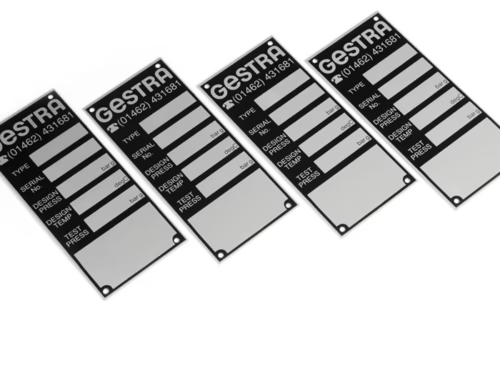
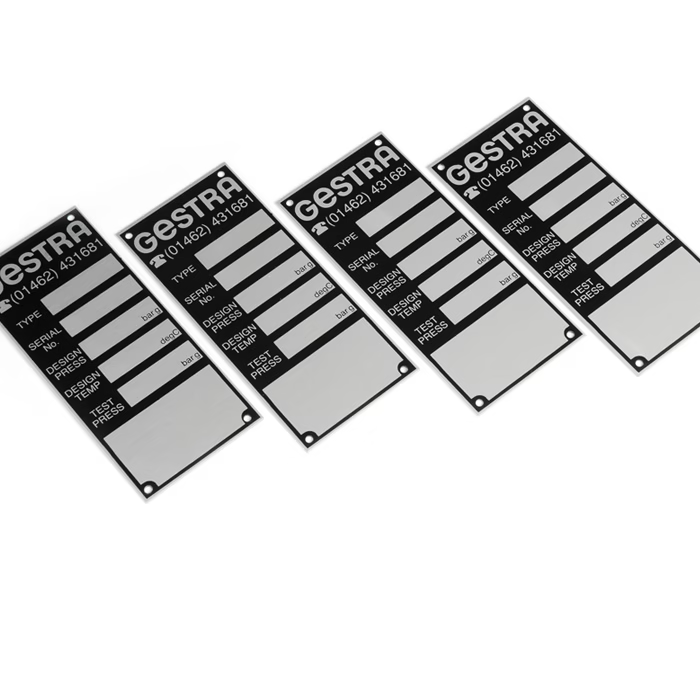
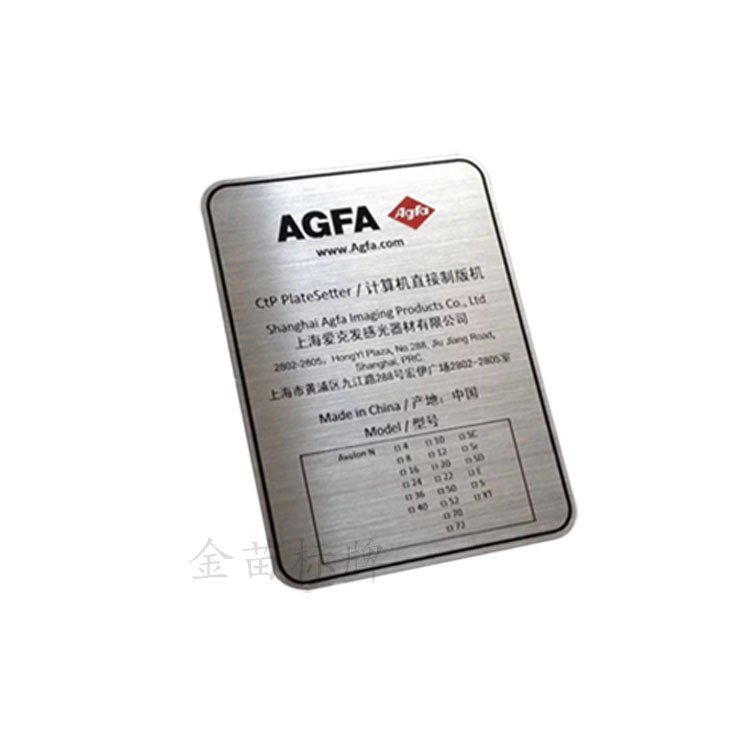
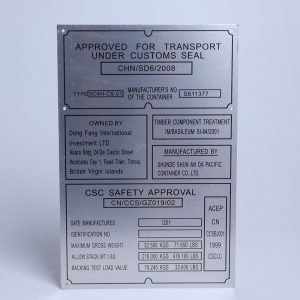
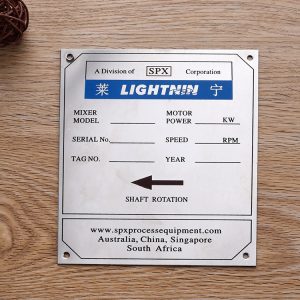
- The format example is shown in the figure:
Material Options for Equipment Nameplates
The material you choose impacts durability, readability, and compliance. Common materials include:
1. Aluminum Equipment Nameplates
Lightweight and corrosion-resistant
Available in anodized finishes for added durability
Ideal for indoor/outdoor use and barcode engraving
2. Stainless Steel Nameplates
Extremely durable and resistant to heat, chemicals, and abrasion
Suitable for harsh industrial or marine environments
Perfect for equipment requiring long-lasting identification
3. Brass Nameplates
Classic appearance with strong resistance to wear
Common in decorative, historical, or luxury applications
4. Plastic & Polyester Labels
Cost-effective, flexible, and available in high-contrast prints
Suitable for indoor applications where chemical/abrasion exposure is limited
5. Polycarbonate & Lexan Overlays
Excellent for control panels and user interfaces
Can be back-printed for additional protection
Information Typically Required on Equipment Nameplates
While requirements vary by industry, most equipment nameplates include:
Manufacturer Name & Logo
Model & Serial Numbers
Electrical Ratings (voltage, amperage, frequency, wattage)

Date of Manufacture
Compliance Marks (UL, CE, CSA, ISO)
Warning Symbols (high voltage, fire hazard, PPE requirements)
Operating Conditions (temperature ranges, environmental limits)

Methods of Printing and Engraving
How information is applied to the nameplate affects its readability and longevity:
Laser Engraving – Permanent, tamper-resistant, and precise for barcodes & QR codes.
Chemical Etching – Deep marking resistant to wear and corrosion.
Screen Printing – High-contrast colors, though less durable than engraving.
Digital Printing – Full-color logos and detailed graphics.
Embossing or Stamping – Raised or indented text for long-lasting readability.
Industries That Require Equipment Nameplates
Manufacturing & Automation – Machinery, control systems, robotics

Electrical & Electronics – Panels, power supplies, and appliances
Medical & Healthcare – Devices, surgical instruments, laboratory equipment
Transportation – Automotive parts, aviation components, rail systems
Construction & Heavy Equipment – Excavators, cranes, power tools
Oil & Gas, Marine, Mining – Harsh-environment applications requiring rugged durability

Designing a Compliant Equipment Nameplate
When designing a nameplate, businesses must consider:
Legibility – Fonts and symbols must remain clear under operating conditions.
Durability – Choose materials that resist heat, moisture, and abrasion.
Size & Placement – Large enough to be seen, placed in accessible locations.
Compliance – Verify against UL, CE, OSHA, or other required standards.
Branding – Incorporate company logos while keeping regulatory data readable.
In summary, the nameplates refers to the metal labels mounted on the instruments and equipment, as well as the nameplates that have already been fixed on the machinery. The equipment nameplates usually contain equipment ID, model, performance, specifications, date of manufacture, factory number and manufacturer. The nameplate mounted by the manufacturer generally includes the equipment number and the date of use specified by the factory.
FAQs on Equipment Nameplate Requirements
Q1: Are equipment nameplates legally required?
A1: Yes, in most industries, equipment must display identification, safety, and compliance data to meet regulatory standards.
Q2: Can equipment nameplates include barcodes or QR codes?
A2: Absolutely—engraved or printed codes make asset tracking and maintenance management much easier.
Q3: Which material is best for harsh environments?
A3: Stainless steel is the most durable, followed by anodized aluminum for outdoor or chemical exposure.
Q4: How do I know what compliance marks are required?
A4: It depends on your industry and location. Common requirements include UL (US), CE (Europe), and CSA (Canada).
Q5: Can equipment nameplates be customized with branding?
A5: Yes, we can add your company logo and colors while ensuring all compliance information is included.
Q6: What is the typical lifespan of an equipment nameplate?
A6: Depending on material and environment, they can last from 10 to 25+ years.
Q7: Do you provide design proofs before production?
A7: Yes, we always send digital proofs for approval to ensure accuracy.
Q8: How are nameplates attached to equipment?
A8: Options include industrial adhesives, rivets, screws, or magnetic backings.
Q9: Do you handle small orders?
A9: Yes, we support both low-volume custom runs and high-volume production orders.
Q10: How quickly can I receive my order?
A10: Standard production time is 5–7 business days, with rush options available.