Metal Furniture Tags in 2026: Branding, Traceability, and Why Furniture Manufacturers Need Them
Furniture branding is no longer just about logos, finishes, and packaging. For many manufacturers, it now includes how each product is identified, tracked, and presented throughout its service life. Metal furniture tags help combine durable product identification with a premium visual finish.
Whether you produce home furniture, office systems, hospitality furniture, or custom commercial fixtures, a well-designed metal furniture tag can do much more than display a brand name. It can strengthen brand identity, support traceability, improve product presentation, and help customers recognize quality at a glance.
In this guide, we explain what metal furniture tags are, why they matter, which materials and finishes are most common, and how to choose the right option for your furniture products.
Table of Contents
- What Are Metal Furniture Tags?
- Why Metal Furniture Tags Matter
- Key Benefits of Metal Furniture Tags
- Common Materials Used for Metal Furniture Tags
- Popular Finishes and Manufacturing Processes
- What Information Can Be Added?
- How Metal Furniture Tags Support Traceability
- How to Choose the Right Metal Furniture Tag
- Custom Metal Furniture Tags vs Standard Labels
- Trends in Metal Furniture Tags for 2026
- Why Work With a Custom Manufacturer
- FAQs About Metal Furniture Tags
Need Custom Metal Furniture Tags?
We provide custom metal furniture tags in aluminum, stainless steel, brass, and zinc alloy with engraving, etching, printing, embossing, and multiple mounting options.
What Are Metal Furniture Tags?
Metal furniture tags are custom identification plates, labels, or badges attached to furniture products. They are typically made from materials such as aluminum, stainless steel, brass, or zinc alloy and can be customized with a company logo, model number, serial code, QR code, or other product details.
These tags may be used for several purposes at the same time:
- Brand presentation
- Product identification
- Serial or batch tracking
- Authentication
- Decorative enhancement
- After-sales support
Unlike paper stickers or basic plastic labels, metal tags are designed to offer a more durable and premium solution. They are especially suitable for furniture that is expected to last for years and maintain a consistent brand appearance over time.
Why Metal Furniture Tags Matter in Modern Furniture Manufacturing
1. Stronger Brand Recognition
A custom metal furniture tag gives a product a clear identity. When customers see a neatly engraved or embossed metal logo plate on a chair, table, cabinet, or sofa, the product immediately feels more established and professional.
For premium furniture brands, this matters even more. A metal tag can reinforce the idea of quality craftsmanship, attention to detail, and brand consistency. In many cases, it becomes a subtle but memorable branding element that stays with the product for its full life cycle.
2. Better Product Traceability
Modern furniture production often involves multiple product lines, different materials, and large shipment volumes. Metal furniture tags can include serial numbers, batch numbers, model names, or QR codes, making it easier to identify products accurately.
This is useful for:
- Quality control
- Warehouse management
- Replacement part matching
- Warranty support
- After-sales service
- Export documentation alignment
3. Long-Term Durability
Furniture products are handled, moved, cleaned, and used repeatedly. A low-quality label may fade, peel, or become unreadable. Metal furniture tags are better suited to long-term use, especially when the right material and finishing method are chosen.
For example, engraved stainless steel tags or etched aluminum plates can remain readable and visually attractive for years. This is particularly important for office furniture, hotel furniture, outdoor furniture, and commercial installations.
4. Improved Perceived Value
Customers often judge product quality through details. A custom metal furniture tag can increase the perceived value of a product by making it look more refined and intentional.
Even when the cost increase per unit is relatively small, the visual upgrade can be significant. For luxury furniture, custom cabinetry, hospitality furniture, and designer collections, this can support a stronger premium positioning.
Key Benefits of Metal Furniture Tags
Premium Appearance
Metal naturally gives a product a more sophisticated and durable image. Brushed, polished, matte, antique, or embossed finishes can be selected to match different furniture styles, from minimalist modern to classic luxury.
High Durability
Compared with paper labels or low-end plastic tags, metal tags resist wear more effectively. They are less likely to tear, wrinkle, or lose their shape. With appropriate finishing, they also maintain readability and appearance over time.
Flexible Customization
Metal furniture tags can be customized in many ways, including:
- Shape
- Thickness
- Corner style
- Finish
- Color
- Logo treatment
- Text layout
- Serial numbering
- Barcode or QR code integration
- Mounting method
Suitable for Many Furniture Types
Metal tags can be used on:
- Wooden furniture
- Metal furniture
- Upholstered furniture
- Outdoor furniture
- Office furniture
- Hotel furniture
- Restaurant furniture
- Custom-made and OEM furniture
Better Product Authentication
A permanent metal identification plate helps distinguish authentic branded products from generic or copied items. For established furniture brands, this can support brand protection and market differentiation.
Common Materials Used for Metal Furniture Tags
| Material | Main Advantages | Best For |
|---|---|---|
| Aluminum | Lightweight, cost-effective, easy to customize | Indoor furniture, office furniture, large-volume projects |
| Stainless Steel | Strong, durable, corrosion-resistant | Outdoor furniture, premium furniture, commercial use |
| Brass | Warm appearance, classic and elegant look | Luxury furniture, vintage furniture, decorative cabinetry |
| Zinc Alloy | Ideal for cast 3D logos and emblems | Decorative badges, raised logo plates, premium branding |
Aluminum Furniture Tags
Aluminum is one of the most common materials for custom furniture tags. It is lightweight, cost-effective, and easy to process. It works well for printed, etched, anodized, or embossed applications.
Stainless Steel Furniture Tags
Stainless steel is known for its strength, durability, and corrosion resistance. It is often selected for premium furniture, outdoor furniture, and commercial applications where long-term performance matters.
Brass Furniture Tags
Brass offers a warm, classic, and elegant appearance. It is often used in luxury furniture, antique-style furniture, vintage collections, and decorative cabinetry.
Zinc Alloy and Decorative Metal Badges
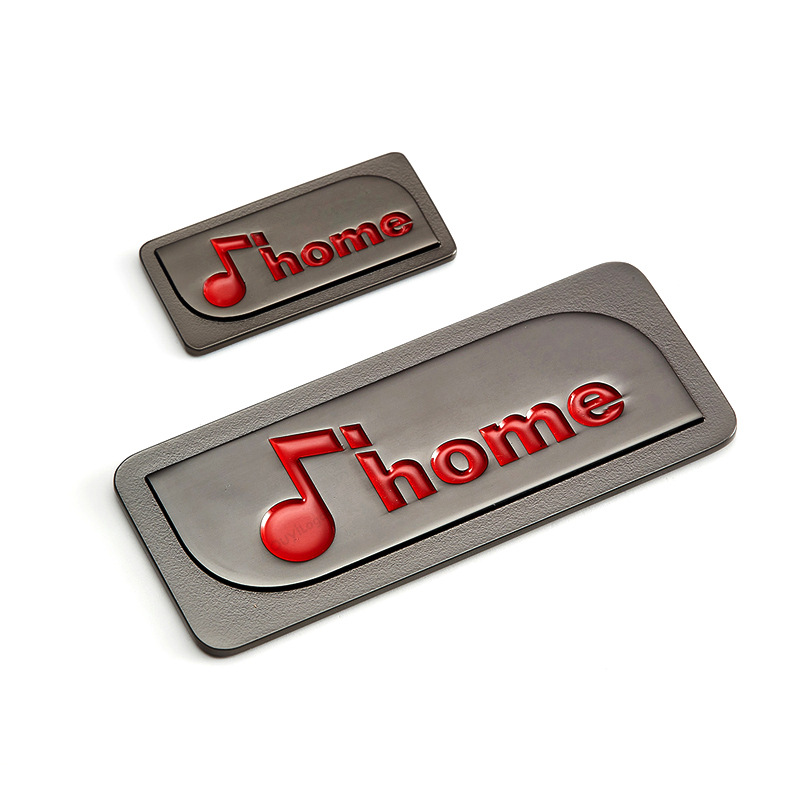
Zinc alloy is commonly used for cast decorative emblems and three-dimensional furniture badges. It is a good option when the goal is to create a stronger ornamental effect or raised logo appearance.
Popular Finishes and Manufacturing Processes
Etching
Etching is a popular option for fine-detail logos, text, and graphic lines. It creates a refined, professional look and is suitable for premium branding plates.
Laser Engraving
Laser engraving produces precise, permanent markings. It is widely used for serial numbers, product models, logos, and variable data.
Screen Printing
Screen printing is useful when the tag design includes colored logos, icons, or text. It is often combined with protective coatings for better durability.
Embossing and Debossing
Embossed and debossed tags create texture and visual depth. This helps the logo or text stand out and can make the furniture label feel more premium.
Brushed, Matte, Polished, and Antique Finishes
- Brushed finish for modern and professional styles
- Polished finish for a bright premium effect
- Matte finish for understated elegance
- Antique finish for classic or vintage furniture
What Information Can Be Added to a Metal Furniture Tag?
Metal furniture tags can carry much more than a logo. Depending on the application, they may include:
- Brand name
- Company logo
- Model number
- Item code
- Serial number
- Batch number
- QR code
- Barcode
- Country of origin
- Care or maintenance details
- Product line name
- Website or support reference
How Metal Furniture Tags Support Traceability
Traceability is becoming increasingly important in manufacturing because it improves internal control and makes after-sales service more efficient. A durable metal tag helps preserve important product information directly on the furniture item itself.
For example, a furniture manufacturer may use tags to identify:
- Production batch
- Supplier code
- Assembly line
- Order reference
- Custom project number
- Warranty reference
- Digital product page via QR code
How to Choose the Right Metal Furniture Tag
Consider the Application Environment
Will the furniture be used indoors or outdoors? In a dry residential setting or a humid commercial space? Products exposed to cleaning chemicals, moisture, or frequent handling may require more durable materials and finishes.
Match the Tag to the Brand Style
A brushed stainless steel plate may suit a modern office furniture brand, while an antique brass tag may be better for luxury or classic furniture.
Decide What Information Is Necessary
Some customers only need a logo badge. Others need a tag that includes model details, batch codes, or QR-based product data.
Choose the Right Mounting Method
- Strong adhesive backing
- Screws
- Rivets
- Nails
- Embedded installation
Balance Cost and Value
For high-volume furniture lines, cost control is important. For premium collections, appearance and durability may matter more than minimizing unit cost.
Custom Metal Furniture Tags vs Standard Labels
When Standard Labels May Be Enough
- Low-cost temporary products
- Short-life items
- Products where branding is not a priority
- Internal-use applications with limited visual requirements
When Custom Metal Tags Are the Better Choice
- Premium furniture
- Branded furniture collections
- Export furniture
- Hospitality and commercial furniture
- Outdoor furniture
- Long-life furniture products
- OEM and ODM private-label projects
Why the Upgrade Often Pays Off
A custom metal tag can improve the product’s visual identity, strengthen brand recognition, and support better traceability.
Trends in Metal Furniture Tags for 2026
More Focus on Traceability
Manufacturers are increasingly interested in labels and tags that can connect physical products with digital information. QR codes, serial numbers, and structured product identification support that shift.
Cleaner, More Premium Design
Minimalist branding continues to influence furniture aesthetics. Many brands prefer understated brushed metal logo plates, engraved marks, and neat geometric shapes instead of overly complex labels.
Greater Interest in Long-Life Identification
As furniture brands emphasize quality, durability, repairability, and long-term value, permanent identification solutions become more attractive than short-life alternatives.
Better Integration With Product Information Systems
Metal tags are increasingly being used as the physical carrier for digital reference points, especially through QR codes.
Why Work With a Custom Metal Furniture Tag Manufacturer
Material Guidance
An experienced supplier can recommend whether aluminum, stainless steel, brass, or zinc alloy is the best fit for your application.
Design Support
- Logo placement
- Size
- Thickness
- Finish
- Readability
- Mounting method
- Cost efficiency
Sampling and Production Consistency
For furniture brands, especially those ordering in bulk, consistency matters. A reliable manufacturer can provide stable quality across repeated production runs.
Better Fit for OEM and ODM Projects
Custom metal furniture tags are particularly useful for OEM and ODM buyers that need private labeling, project-based branding, or differentiated product identity.
Looking for a Reliable Metal Furniture Tag Supplier?
From engraved logo plates to custom serial number tags, we support OEM, ODM, wholesalers, importers, and furniture brands with fast sampling and stable bulk production.
Conclusion
Metal furniture tags are far more than decorative add-ons. They are practical branding and identification tools that can improve product appearance, strengthen traceability, and support long-term brand recognition.
For furniture manufacturers, wholesalers, importers, and premium brands, the right metal tag can add both visual and operational value. It helps a product look more professional, stay identifiable over time, and strengthen a more durable brand image.
If you want your furniture products to stand out while maintaining a premium and professional identity, custom metal furniture tags are a smart investment.
FAQs About Metal Furniture Tags
What are metal furniture tags used for?
Metal furniture tags are used for branding, product identification, serial tracking, decoration, and authentication. They can display a logo, model number, serial code, QR code, or other product information.
Which material is best for metal furniture tags?
It depends on the application. Aluminum is cost-effective and versatile, stainless steel is durable and corrosion-resistant, brass offers a classic premium look, and zinc alloy is suitable for decorative 3D emblems.
Can metal furniture tags be customized?
Yes. They can be customized in size, shape, finish, thickness, logo style, text content, numbering, and attachment method.
How are metal furniture tags attached?
Common attachment methods include adhesive backing, screws, rivets, nails, or embedded installation. The right option depends on the furniture design and intended use.
Are metal furniture tags suitable for outdoor furniture?
Yes, especially when corrosion-resistant materials such as stainless steel are used and the finish is selected appropriately for the environment.
Can metal furniture tags include QR codes?
Yes. QR codes can be added for product information, warranty access, authentication, or digital catalog links.
Which finish is best for premium furniture branding?
Popular premium options include brushed stainless steel, engraved brass, embossed aluminum, and antique-finish decorative tags. The best choice depends on your furniture style and brand image.