Anodized Aluminum Tags: Uses, Benefits, Customization and Buying Guide
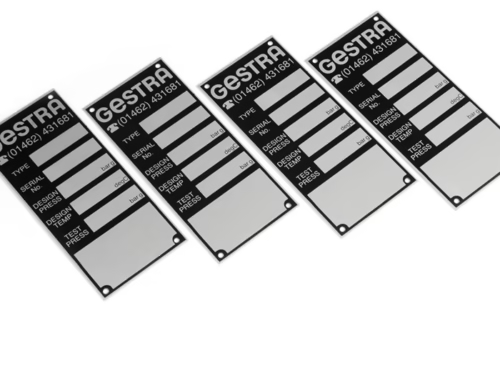
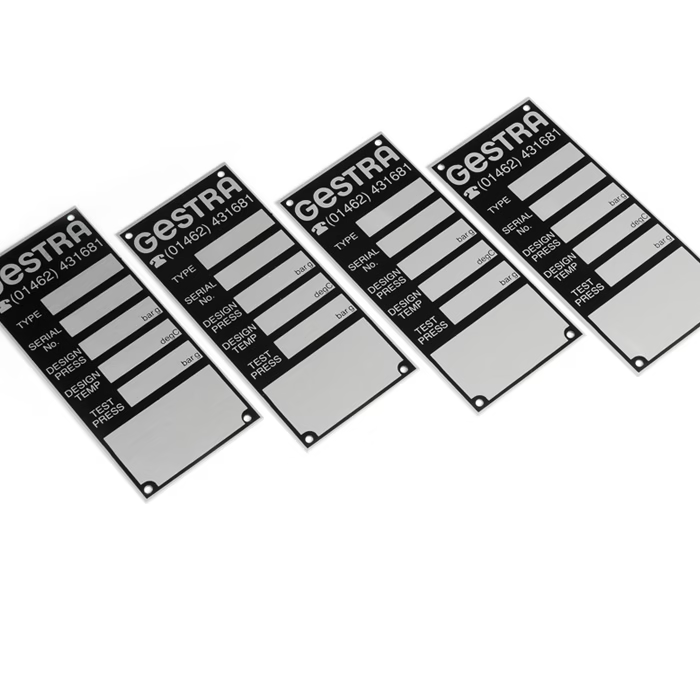
These tags can be customized with serial numbers, barcodes, QR codes, logos, technical specifications and warning messages. They can also be manufactured in different sizes, thicknesses, colors and shapes, with mounting holes or adhesive backing.
This guide answers the most frequently asked questions about anodized aluminum tags and explains how to select the right material, marking method, thickness and mounting option for your application.
What Are Anodized Aluminum Tags?
Anodized aluminum tags are identification tags manufactured from aluminum that has undergone an electrochemical surface treatment called anodizing.
During anodizing, the aluminum surface is converted into a controlled aluminum oxide layer. Unlike paint or plating, the anodized finish becomes an integral part of the aluminum surface rather than a separate coating applied on top.
After anodizing, the aluminum may be:
- Left with a natural silver finish
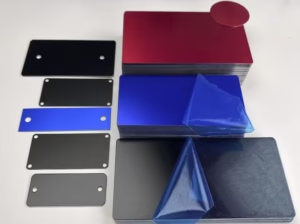
- Dyed black, red, blue, gold, green or another color
- Sealed to improve environmental resistance
- Laser marked with permanent information
- Printed with graphics, branding or operating instructions
The finished tag provides a lightweight, corrosion-resistant and professional identification solution for many indoor and outdoor applications.
What Are Anodized Aluminum Tags Used For?
Anodized aluminum tags are used in a wide range of industries because they can display permanent or variable information while remaining lightweight and economical.
Equipment Identification
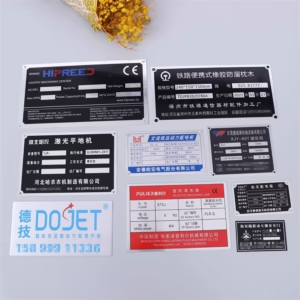
Manufacturers use anodized aluminum tags to identify machinery, electrical equipment, tools, pumps, motors, control panels and production systems.
Equipment tags may display:
- Equipment names

- Model numbers
- Serial numbers
- Voltage and current ratings
- Operating instructions
- Maintenance schedules
- Manufacturer information
- Safety warnings
Asset Tracking
Anodized aluminum asset tags can be marked with sequential numbers, barcodes, QR codes or Data Matrix codes. They help organizations identify, locate and manage physical assets.
Common applications include:
- Computers and electronic devices
- Industrial tools
- Office equipment
- Laboratory equipment
- Warehouse machinery
- Rental equipment
- Furniture and fixtures
Valve and Pipe Identification
Numbered anodized aluminum tags are frequently used to identify valves, pipes, control points and shut-off systems in factories, utility plants and commercial buildings.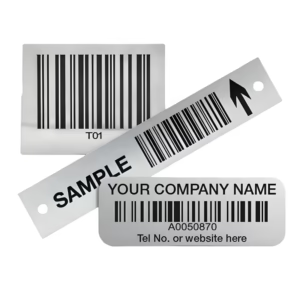
They can be attached with stainless steel wire, ball chains, split rings, cable ties or mechanical fasteners.
Safety and Warning Identification
Colored anodized tags can communicate hazards, operating restrictions and maintenance status.
Typical examples include:
- Danger tags
- Warning tags
- Lockout tags
- Electrical hazard labels
- Inspection tags
- Maintenance status tags
- Emergency shut-off tags
Product Branding
Anodized aluminum nameplates can be attached to machinery, electronics, appliances and consumer products. They can display a company logo, product model, serial number and contact information while enhancing the appearance of the finished product.
Benefits of Anodized Aluminum Tags
Lightweight Construction
Aluminum is much lighter than stainless steel and many other industrial metals. This makes anodized aluminum tags easy to transport, handle and install.
The low weight is particularly useful for portable equipment, electronic devices, hanging tags, aerospace components and large-volume asset tracking projects.
Improved Corrosion Resistance
The anodized oxide layer helps protect the underlying aluminum from moisture, humidity, rain and general environmental exposure.
Anodized aluminum tags are suitable for many indoor and outdoor environments. However, their actual service life depends on the aluminum alloy, anodizing quality, sealing process, marking method and surrounding conditions.
Good Abrasion Resistance
An anodized surface is harder than untreated aluminum and offers improved resistance to routine scratching, rubbing and frequent handling.
This makes anodized tags suitable for equipment that is regularly inspected, cleaned or handled. The anodized surface does not make thin aluminum impact-proof, so the correct material thickness must still be selected.
High-Contrast Laser Marking
Colored anodized aluminum is highly suitable for laser marking. A laser can remove or modify the colored surface to create contrasting text, numbers and graphics.
Black anodized aluminum is especially popular because it can produce clear silver or light-colored markings.
Laser marking can be used for:
- Serial numbers
- Asset numbers
- Barcodes
- QR codes
- Technical data
- Company logos
- Variable information
Multiple Color Options
Anodized aluminum tags are available in a range of decorative and functional colors.
Common options include:
- Natural silver

- Black
- Red
- Blue
- Gold
- Green
- Bronze
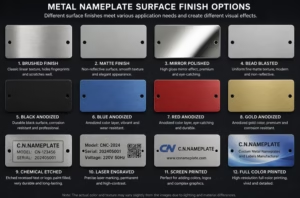
Different colors can support branding or help users classify equipment by department, status, hazard level or application.
Anodized colors may vary slightly between production batches. Buyers who require precise brand colors should provide a Pantone reference, physical color sample or acceptable color tolerance.
Professional Appearance
Anodized aluminum provides a clean and modern industrial appearance. It is commonly selected for visible product nameplates, machine labels, electronic equipment and control panels.
Available finishes may include:
- Matte
- Brushed
- Satin
- Glossy
- Textured
Can Anodized Aluminum Tags Be Used Outdoors?
Yes. Anodized aluminum tags can be used outdoors when the appropriate material, finish and marking method are selected.
Outdoor performance depends on several factors:
- Anodized coating quality
- Sealing quality
- Aluminum alloy
- UV exposure
- Salt exposure
- Industrial chemicals
- Cleaning procedures
- Mounting method
- Mechanical wear
A tag installed on agricultural machinery may face different conditions from one installed near the sea, inside a warehouse or on a chemical processing tank.
For long-term outdoor applications, provide the manufacturer with details about the installation environment before production begins.
Are Anodized Aluminum Tags Weatherproof?
Anodized aluminum performs well in many outdoor environments, but no metal tag is resistant to every possible condition.
Strong acids, alkaline cleaners, continuous salt deposits, extreme heat and severe mechanical damage may reduce the service life of the tag.
For coastal, marine or chemically aggressive environments, stainless steel may be a better material choice.
How Long Do Anodized Aluminum Tags Last?
There is no single service-life figure for every anodized aluminum tag.
Tag durability depends on:
- Indoor or outdoor installation
- Anodized coating specification
- Sealing quality
- Sunlight exposure
- Contact with chemicals or salt
- Cleaning frequency
- Mechanical abrasion
- Aluminum thickness
- Marking method
- Installation method
A properly specified anodized aluminum tag can provide long-term identification in normal industrial environments.
Laser-marked information usually offers better resistance to abrasion and cleaning than ordinary surface printing. Printed graphics may still be preferable when multiple colors, detailed logos or complex warning symbols are required.
Do Colored Anodized Aluminum Tags Fade?
Some anodized colors may gradually change or fade after extended exposure to strong sunlight.
Color stability depends on:
- The type of dye
- The anodizing process
- Sealing quality
- UV intensity
- Exposure duration
- The selected color
For demanding outdoor applications, discuss UV resistance with the manufacturer. Natural silver, black or specially selected exterior-grade anodized finishes may offer more predictable results than some bright decorative colors.
Can Anodized Aluminum Tags Be Laser Engraved?
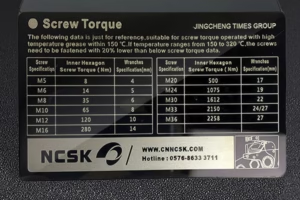
Yes. Laser engraving is one of the most common methods for customizing anodized aluminum tags.
Laser marking can produce:
- Fine text
- Small serial numbers
- Machine-readable codes
- Detailed logos
- Variable data
- Consistent markings across large production batches
Advantages of Laser-Marked Anodized Aluminum Tags
- No ink is required
- Variable data can be produced efficiently

- Fine details can be reproduced
- Marks resist routine handling
- Sequential numbering is easy to manage
- Barcodes and QR codes can be included
- Small and large production batches are possible
Laser Marking Versus Deep Engraving
Laser marking on anodized aluminum normally affects the anodized surface rather than cutting deeply into the base metal.
Deep engraving removes more material and may be required when information must remain readable after severe abrasion or surface damage.
For most asset tags, equipment labels and serial-number tags, high-contrast surface laser marking is sufficient.
Can Anodized Aluminum Tags Include Barcodes and QR Codes?
Yes. Anodized aluminum tags can be manufactured with many types of machine-readable codes.
Options include:
- Code 128 barcodes
- Code 39 barcodes
- QR codes
- Data Matrix codes
- UID codes
- Human-readable serial numbers
- Custom database references
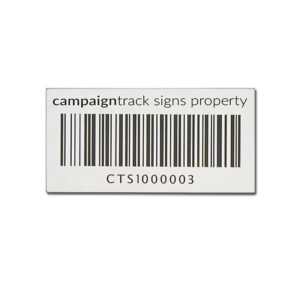
Every tag in an order can contain unique information. For example, an order of 5,000 tags can include 5,000 individual serial numbers and corresponding QR codes.
How Should Variable Data Be Supplied?
Variable information is normally supplied in an Excel or CSV file.
The spreadsheet may include separate columns for:
- Serial number
- Asset number
- Barcode data
- QR code URL
- Product model
- Department
- Location
- Additional variable text
The manufacturer should prepare a digital proof or physical sample before mass production.
What Makes a Barcode or QR Code Easy to Scan?
Reliable scanning depends on:
- Strong contrast
- Correct code dimensions
- Adequate quiet zone
- Suitable bar or module width
- Clean artwork
- A flat mounting surface
- Appropriate scanning distance
- Protection from physical damage
Avoid positioning important codes too close to holes, edges, corners or raised surfaces.
Available Sizes and Shapes
Anodized aluminum tags can be manufactured in standard or custom dimensions.
Common shapes include:
- Rectangles
- Squares
- Circles
- Ovals
- Rounded rectangles
- Custom profiles
Special shapes can be produced by laser cutting, die cutting, CNC machining, stamping or punching.
Simple rectangular tags are generally more economical. Custom outlines, internal cutouts and complex shapes may require additional cutting time or tooling.
What Thickness Should You Choose?
The correct aluminum thickness depends on the tag dimensions, mounting method and expected mechanical stress.
| Application | Suggested Starting Thickness |
|---|---|
| Small adhesive equipment labels | 0.3–0.5 mm |
| General asset tags | 0.5–0.8 mm |
| Machine nameplates | 0.8–1.0 mm |
| Riveted industrial tags | 1.0–1.5 mm |
| Hanging valve tags | 1.0–2.0 mm |
| Large or unsupported tags | 1.5 mm or thicker |
These thicknesses are general starting points rather than fixed specifications.
A thinner tag is lightweight and economical but may bend more easily. A thicker tag provides greater rigidity but increases material cost and weight.
To receive an appropriate recommendation, provide:
- Finished tag dimensions
- Installation method
- Mounting surface
- Indoor or outdoor location
- Expected impact or vibration
- Required service life
Mounting Options for Anodized Aluminum Tags
Adhesive Backing
Pressure-sensitive adhesive is convenient for flat and clean mounting surfaces.
Adhesive-backed anodized aluminum tags are commonly installed on:
- Electrical cabinets
- Electronic devices
- Office equipment
- Control panels
- Indoor machinery
The surface should be clean, dry and free from dust, oil and loose paint before installation.
Different adhesives may be required for smooth metal, plastic, powder-coated surfaces, textured surfaces or outdoor conditions.
Mounting Holes
Anodized aluminum tags can be manufactured with one or more mounting holes.
They may be installed using:
- Screws
- Rivets
- Bolts
- Wire
- Chains
- Cable ties
The quotation request should specify the hole diameter, number of holes, hole position and distance from the tag edges.
Combination Mounting
Some industrial projects use both adhesive backing and mounting holes. The adhesive holds the tag in position during assembly, while screws or rivets provide permanent mechanical attachment.
Hanging Tags
Valve tags and inspection tags are commonly manufactured with a single hole and attached using:
- Stainless steel wire
- Beaded chain
- Split rings
- S-hooks
- Nylon cable ties
- Stainless steel cable ties
Are Anodized Aluminum Tags Chemical Resistant?
Anodized aluminum resists many normal industrial conditions, but chemical compatibility depends on the specific substance, concentration, temperature and exposure time.
Strong alkaline substances can attack aluminum and anodized surfaces. Certain acids and aggressive cleaning chemicals may also affect the appearance or protective layer.
For applications involving chemical exposure, provide the following information:
- Chemical name
- Concentration
- Exposure duration
- Operating temperature
- Cleaning method
- Indoor or outdoor conditions
A material or sample test may be required before mass production. Stainless steel may be more suitable for highly aggressive chemical environments.
Can Anodized Aluminum Tags Withstand High Temperatures?
Anodized aluminum can tolerate many normal industrial temperatures, but it is not always the best choice for extreme heat.
High temperatures may affect:
- Aluminum strength
- Adhesive performance
- Printed ink
- Anodized color
- Surface sealing
- Overall appearance
For tags installed near furnaces, engines, exhaust systems or high-temperature processing equipment, stainless steel may provide better mechanical and dimensional stability.
Anodized Aluminum Tags Versus Stainless Steel Tags
| Feature | Anodized Aluminum | Stainless Steel |
|---|---|---|
| Weight | Lightweight | Heavier |
| Cost | Usually more economical | Usually higher |
| Color options | Multiple anodized colors | Mainly natural metallic finishes |
| Corrosion resistance | Good for many environments | Better for severe environments |
| Impact resistance | Moderate | High |
| High-temperature performance | More limited | Generally better |
| Laser-marking contrast | Excellent on colored anodizing | Depends on marking process |
| Ease of cutting | Easier | More difficult |
| Appearance | Decorative and industrial | Premium industrial appearance |
Choose Anodized Aluminum When You Need:
- Low weight
- Strong marking contrast
- Multiple color options
- Economical bulk production
- Barcodes or QR codes
- General indoor or outdoor identification
- Decorative product branding
Choose Stainless Steel When You Need:
- Greater mechanical strength
- Severe chemical resistance
- High-temperature performance
- Marine or offshore durability
- Greater resistance to impact and deformation
Anodized Aluminum Tags Versus Plastic Labels
Plastic labels can be economical for temporary or light-duty indoor use. However, anodized aluminum provides several advantages for permanent industrial identification.
Compared with many plastic labels, anodized aluminum offers:
- Greater rigidity
- Better heat resistance
- Better dimensional stability
- Greater resistance to tearing
- A more professional appearance
- Secure mechanical mounting
- Better suitability for permanent equipment identification
Plastic may still be appropriate for temporary identification, highly curved surfaces, electrical insulation or projects where minimum cost is the main priority.
What Information Can Be Added to an Anodized Aluminum Tag?
A custom anodized aluminum tag can include:
- Company logo
- Product name
- Model number
- Serial number
- Manufacturing date
- Asset number
- Barcode
- QR code
- Patent information
- Voltage rating
- Operating instructions
- Safety symbols
- Warning text
- Inspection information
- Contact details
- Country of origin
Fixed and variable information can be combined on the same tag. For example, the company logo and warning text may remain the same while every tag receives a unique serial number and QR code.
Which Artwork Files Should You Provide?
Vector artwork is preferred for logos, line graphics, cutting outlines and precise engraving.
Recommended file formats include:
- AI
- EPS
- CDR
- SVG
- DXF
High-resolution PNG, JPG or TIFF files may be acceptable for printed graphics, but they are less suitable for precision cutting and engraving.
Variable data should normally be supplied in an Excel or CSV file.
Your artwork or specification should clearly show:
- Finished dimensions
- Material thickness
- Background color
- Text and graphic colors
- Hole size and position
- Corner radius
- Adhesive requirements
- Variable data location
- Surface finish
- Required quantity
What Affects the Price of Anodized Aluminum Tags?
Material Thickness
Thicker aluminum requires more raw material and may take longer to cut or process.
Tag Size
Larger tags use more material and reduce the number of pieces that can be produced from each sheet.
Order Quantity
Larger orders generally achieve a lower unit price because artwork, setup and production preparation costs are distributed across more pieces.
Marking Method
Pricing varies depending on whether the tags are:
- Laser marked
- Screen printed
- Digitally printed
- Chemically etched
- Embossed
- Stamped
Number of Printed Colors
Single-color printing is generally more economical than multiple-color printing.
Variable Data
Sequential numbers, barcodes and QR codes require data processing and production controls. Modern laser-marking systems can produce variable data efficiently, especially for medium and large orders.
Shape and Cutting Method
Custom shapes, internal cutouts and complex profiles may increase cutting time or require a production die.
Mounting Options
Adhesive backing, mounting holes, chains, wires, rings and separate fasteners add material and processing costs.
Packaging Requirements
Individual protective film, sequence sorting, barcode verification, custom labels and special packaging may affect the final price.
How to Request an Accurate Quotation
Provide as much of the following information as possible when requesting a quotation:
- Tag dimensions
- Aluminum thickness
- Required quantity
- Anodized color
- Text and graphic colors
- Marking method
- Fixed or variable information
- Barcode or QR code requirements
- Hole diameter and position
- Adhesive requirements
- Indoor or outdoor application
- Chemical or temperature exposure
- Artwork file
- Packaging requirements
- Required delivery date
A drawing, photograph or existing sample can help prevent misunderstandings and shorten the quotation process.
Should You Order a Sample Before Mass Production?
A pre-production sample is recommended when the project involves:
- A new design
- Precise brand colors
- Small barcodes or QR codes
- Special adhesive
- Harsh outdoor conditions
- Chemical exposure
- Unusual shapes
- Tight dimensional tolerances
- Critical serial-number data
A sample allows the buyer to evaluate:
- Material thickness
- Anodized color
- Surface finish
- Marking contrast
- Barcode readability
- Hole positions
- Adhesive performance
- Overall appearance
After approval, the sample can be retained as the reference standard for mass production.
Frequently Asked Questions About Anodized Aluminum Tags
Are anodized aluminum tags waterproof?
Anodized aluminum tags are suitable for rain, humidity and many wet environments. Performance depends on the anodizing quality, sealing process, marking method and surrounding chemicals.
Can anodized aluminum tags rust?
Aluminum does not develop red iron rust. However, it can corrode in aggressive conditions, especially when exposed to strong alkaline chemicals, continuous salt deposits or incompatible metals.
Can every tag have a different serial number?
Yes. Laser marking can produce sequential numbers, random identification codes and database-linked information on individual tags.
Can QR codes be added to anodized aluminum tags?
Yes. QR codes can be laser marked or printed. The code must have adequate dimensions, contrast and spacing to ensure reliable scanning.
Are black anodized aluminum tags suitable for laser engraving?
Yes. Black anodized aluminum is one of the most popular options because laser marking can create a clear silver or light-colored contrast.
Can anodized aluminum tags be printed in full color?
Yes. Digital printing can reproduce full-color logos, photographs, gradients and detailed graphics. A protective laminate may be recommended for demanding outdoor or industrial environments.
Can anodized aluminum tags be embossed?
Some designs can be embossed or stamped. Feasibility depends on the aluminum alloy, thickness, tag dimensions and required embossing depth.
Can anodized aluminum tags be manufactured in custom shapes?
Yes. Laser cutting, stamping, die cutting and CNC machining can be used to produce custom shapes and profiles.
Can anodized aluminum tags be installed on curved surfaces?
Thin aluminum tags may conform to slightly curved surfaces. For strongly curved equipment, the tag may need to be pre-formed to the required radius.
What is the minimum order quantity?
The minimum order quantity depends on the dimensions, marking process and customization requirements. Laser-marked tags are often practical for small batches, while die-cut or multi-color printed tags may require higher quantities.
How long does production take?
Production time depends on quantity, material availability, process complexity and sample approval. Standard laser-marked tags are usually faster to manufacture than tags requiring custom tooling, multiple printed colors or special forming.
Order Custom Anodized Aluminum Tags
C.N.Nameplate manufactures custom anodized aluminum tags for industrial identification, asset tracking, machinery, electrical equipment, valve marking and product branding.
Available customization options include:
- Custom sizes and shapes
- Natural silver and colored anodized finishes
- Laser-marked text and logos
- Sequential serial numbers
- Barcodes and QR codes
- Mounting holes
- Adhesive backing
- Rounded corners
- Variable data
- Bulk-order production
Send your drawing, artwork, dimensions, required quantity and application details to receive a customized quotation.
Final Thoughts
Anodized aluminum tags provide an effective balance of durability, lightweight construction, corrosion resistance, appearance and customization flexibility.
They are suitable for asset tracking, equipment identification, valve marking, product branding, safety communication and industrial traceability.
The correct tag specification depends on more than the material alone. Buyers should also consider the installation environment, aluminum thickness, anodized color, marking process, mounting method, barcode requirements and expected service life.
Providing complete project specifications allows the manufacturer to recommend the most suitable and cost-effective anodized aluminum tag.