A logo may be small, but the way it is presented can strongly influence how customers perceive a product. A printed sticker can be suitable for temporary branding, while a well-made metal logo tag feels permanent, tactile and valuable. This is why metal tags are widely used on handbags, clothing, furniture, electronics, appliances, packaging, automotive accessories and industrial products.
However, choosing a custom metal logo tag involves more than selecting gold or silver. Material, manufacturing process, surface finish, thickness and attachment method all affect appearance, durability, cost and ease of installation.
This guide explains the main options and helps designers, purchasing teams and brand owners prepare a clearer specification before requesting a quotation.
What Is a Metal Logo Tag?
A metal logo tag is a customized label, plate, emblem or set of individual letters used to display a brand name, symbol or decorative mark on a product. It may be flat or three-dimensional, printed or engraved, and permanently or temporarily attached.
Depending on its design, the same item may also be called a:
- Metal logo label
- Metal brand tag
- Metal nameplate
- Metal emblem
- Metal badge
- Metal logo plate
- Electroformed nickel sticker
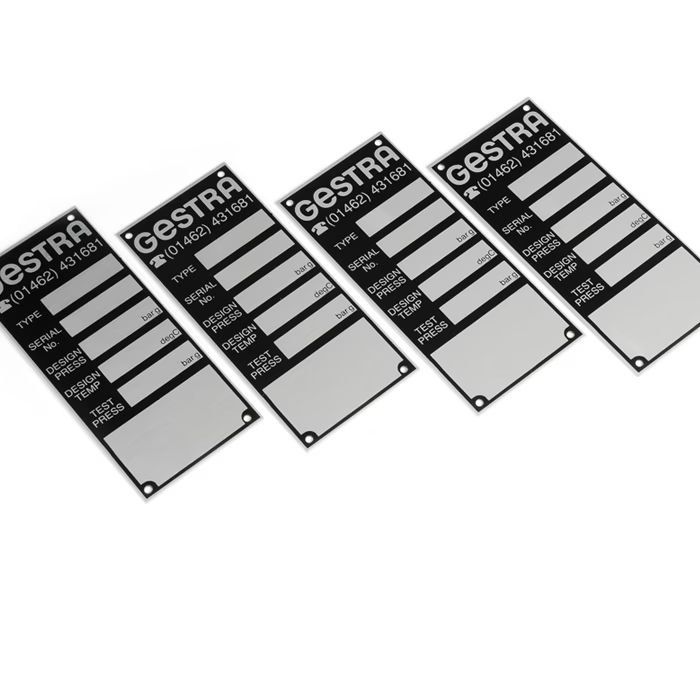
The best term often depends on the construction and application. A thin adhesive plate on an electronic device is usually described as a logo label or nameplate. A raised zinc-alloy piece on a handbag is more likely to be called an emblem or badge. A small plate sewn onto apparel is commonly called a metal clothing tag.
Why Do Brands Use Custom Metal Logo Tags?
They create a more premium appearance
Metal adds visual depth, weight and texture that ordinary printed labels cannot easily reproduce. Brushed stainless steel can create a modern technical look, polished gold plating can suggest luxury, and antique brass can support a traditional or handcrafted style.
They provide long-lasting branding
When the material, coating and attachment are matched to the application, metal tags can resist handling, abrasion, moisture and normal cleaning better than many paper or plastic labels. They are suitable for products expected to remain in use for years.
They make products easier to recognize
A distinctive shape, finish or three-dimensional logo becomes part of the product design. Repeating the same metal branding across a product line also strengthens visual consistency.
They offer extensive customization
Metal logo tags can be made in custom shapes and sizes with engraved, etched, printed, embossed, debossed, cut-out or die-cast details. Designers can also select plating colors, surface textures and mounting systems to suit the product.
Which Metal Is Best for Logo Tags?
There is no single best material for every project. The right choice depends on the required look, product weight, operating environment, design detail, quantity and budget.
| Material | Main advantages | Typical appearance | Common applications |
|---|---|---|---|
| Stainless steel | Strong, corrosion-resistant and suitable for precise flat tags | Brushed, mirror-polished, matte or color-coated | Electronics, appliances, machinery, furniture and premium packaging |
| Aluminum | Lightweight, cost-effective and easy to anodize or print | Natural silver, brushed, colored anodized or printed | Consumer products, equipment, cases, packaging and promotional items |
| Brass | Premium appearance with a warm, traditional character | Polished gold, satin, brushed or antique | Furniture, leather goods, gift boxes, wine packaging and luxury products |
| Zinc alloy | Excellent for thick, sculpted and complex three-dimensional designs | Gold, silver, rose gold, gunmetal, black or antique plating | Handbags, luggage, apparel, footwear and automotive accessories |
| Electroformed nickel | Very thin, precise and suitable for separate letters or detailed logos | Bright silver, matte silver, gold, black or other plated colors | Electronics, cosmetics, appliances, bottles and compact product branding |
Choose stainless steel for a clean, durable look
Stainless steel works well when the tag should be thin, strong and visually precise. It is often selected for modern products, outdoor items and frequently handled surfaces. Brushed finishes reduce glare and fingerprints, while mirror finishes create a more decorative effect. Etching, engraving, printing and cut-out designs can all be used.
Choose aluminum when low weight and color flexibility matter
Aluminum is lighter than stainless steel and can be anodized in a range of colors. It is a practical option for larger tags or products where added weight must be minimized. Printed aluminum also supports multicolor logos and fine graphic details.
Choose brass for warmth and traditional luxury
Brass naturally suits furniture, leather products, wooden boxes and premium gifts. It can be polished for a bright gold appearance or aged to create an antique finish. Because untreated brass can change color over time, the required surface protection and intended aging effect should be discussed before production.
Choose zinc alloy for a substantial 3D emblem
Zinc alloy is commonly die-cast, making it suitable for raised lettering, recessed backgrounds, curved surfaces and complex shapes. It is usually thicker and heavier than a sheet-metal tag. Tooling is required, but the process can become economical for repeat or volume orders.
Choose electroformed nickel for ultra-thin logos
Electroformed nickel logos can reproduce fine lines and separate characters without the appearance of a surrounding plate. A pressure-sensitive adhesive backing allows each part to be applied as a coordinated set, often with a positioning film. This style is popular on electronics, appliances, cosmetics and packaging.
Common Manufacturing Processes for Metal Logo Tags
The manufacturing process determines whether a design looks flat, recessed, raised or fully three-dimensional. Some projects combine two or more processes.
Chemical etching
Chemical etching creates recessed graphics on sheet metal. The etched areas can remain unfilled for a subtle tone-on-tone appearance or receive paint for stronger contrast. It is a good choice for stainless steel and brass tags that require fine text, borders or detailed logos.
Laser engraving
Laser engraving produces permanent, precise markings without adding a separate ink layer. It is useful for clean monochrome logos, small text and designs that may include model information or serial numbers. The final contrast depends on the metal and surface treatment.
Printing
Screen printing is effective for solid spot colors and repeat production, while digital or UV printing is suitable for gradients, multicolor artwork and short runs. A protective coating may be recommended when the printed tag will face abrasion, sunlight, cleaning chemicals or outdoor exposure.
Stamping, embossing and debossing
Stamping can form the outline and create raised or recessed details. An embossed logo rises above the surface, while a debossed logo sits below it. These processes add texture and can be combined with color filling or plating. Tooling is normally required, so order volume and future repeat orders should be considered.
Die casting
Die casting is widely used for thicker zinc-alloy emblems with sculpted surfaces, recessed areas or integrated mounting posts. It offers a strong three-dimensional effect and supports many plating and paint-fill combinations.
Electroforming
Electroforming builds a thin metal logo with very fine detail. It is particularly suitable for individual letters, narrow strokes and lightweight adhesive emblems. A transfer film helps preserve the correct spacing during installation.
For a broader overview, see C.N.Nameplate’s metal label manufacturing processes.
How to Select the Right Finish and Color
The finish should support the brand identity while remaining practical for the product’s environment.
- Brushed or satin: Refined, low-glare and suitable for modern consumer or industrial products.
- Mirror polished: Bright and reflective, creating a jewelry-like appearance.
- Matte or sandblasted: Soft, understated and less likely to show fingerprints.
- Antique: Darkened recessed areas and worn-looking highlights for a classic effect.
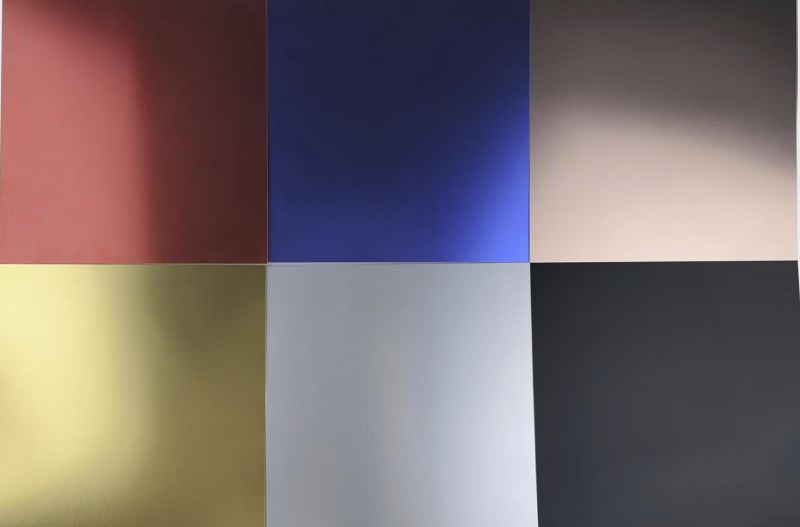
- Electroplated: Common colors include gold, rose gold, silver, gunmetal and black nickel.
- Anodized: Used on aluminum to create a colored protective surface. Learn more about anodized aluminum.
- Paint or enamel fill: Adds brand colors to recessed areas and improves logo contrast.
- Printed graphics: Best when the logo contains several colors, gradients or very fine artwork.
Metallic finishes can look different under warm, cool or directional light. If color and reflectivity are critical, request a physical sample or finish chip instead of approving the project from an on-screen image alone.
How Should a Metal Logo Tag Be Attached?
Attachment is not a minor detail. The wrong backing can make installation difficult, damage the product or allow the tag to loosen during use.
| Attachment | Best suited to | Important consideration |
|---|---|---|
| Pressure-sensitive adhesive | Flat, clean and reasonably smooth surfaces | Adhesive must match the substrate, temperature and exposure conditions |
| Sew-on holes | Clothing, fabric, leather goods and handmade products | Hole position, edge smoothness and thread clearance must be checked |
| Prongs or bendable legs | Handbags, luggage, leather and upholstered products | A rear washer or backing plate may be needed to distribute pressure |
| Rivets | Leather, denim, cases and rugged products | Rivet size must suit both the tag and material thickness |
| Screws or threaded posts | Furniture, panels, machinery and removable assemblies | Confirm hole spacing, thread type and available installation depth |
| Pins, chains or rings | Hangtags, accessories, removable branding and promotional items | Check movement, snagging risk and expected load |
For adhesive tags, tell the manufacturer what surface the tag will bond to. Powder-coated metal, textured plastic, silicone, leather and untreated wood have very different adhesion requirements. The surface should also be tested for cleanliness, texture, curvature and temperature.
For inspiration, compare attachment options used on metal logo tags for handbags and metal logo tags for clothing.
Match the Tag to the Product and Environment
Clothing and textile products
Prioritize low weight, smooth edges and a secure attachment. Consider whether the tag will touch the wearer’s skin or pass through washing and drying cycles. A sample should be tested on the actual garment before mass production.
Handbags, luggage and leather goods
Zinc-alloy emblems, stainless steel plates and brass tags are all common. The finish should coordinate with zippers, buckles and other hardware. The backing must hold securely without tearing or permanently marking the material.
Furniture and home products
Brass, stainless steel and aluminum tags can be attached with adhesive, screws or nails. Consider cleaning products, humidity, surface texture and whether the tag should sit flush or stand slightly proud of the surface.
Electronics and appliances
Thin stainless steel, aluminum and electroformed nickel logos provide a precise modern appearance. Designers should check available space, surface curvature, adhesive compatibility and the risk of electrical contact where relevant.
Outdoor and industrial products
Material grade, marking process, coating and attachment should all be selected for the actual environment. Tell the supplier about UV exposure, salt, moisture, temperature, oils, fuels, cleaning agents and abrasion. A beautiful finish is not enough if it cannot survive the service conditions.
Design Tips That Prevent Production Problems
- Provide vector artwork. AI, EPS, SVG or editable PDF files usually give the cleanest result. Convert fonts to outlines and include a reference image.
- Specify the final dimensions. Do not rely on artwork scale alone. State width, height, thickness, hole size and hole spacing where applicable.
- Avoid details that are too fine. Very narrow strokes, tiny gaps and sharp internal corners may disappear or merge during casting, etching, plating or paint filling.
- Identify critical colors. Supply Pantone references when color matching matters, but remember that metallic substrates and glossy finishes can influence the visual result.
- Design for safe handling. Confirm corner radii, edge finishing and any area that will contact fabric, skin or a finished product surface.
- Plan the attachment early. Holes, posts and prongs affect the tag design and should not be added after the artwork has already been finalized.
- Approve a production proof. Check spelling, orientation, dimensions, finish, logo proportions and backing position before tooling or mass production begins.
What Affects the Price of Custom Metal Logo Tags?
The lowest unit price does not always represent the lowest overall project cost. A tag that is difficult to install, scratches easily or does not match the product hardware can create expensive rework.
The main price factors are:
- Material and metal grade
- Tag size, thickness and weight
- Flat, embossed or three-dimensional construction
- Manufacturing and finishing processes
- Number of plating or paint colors
- Tooling, mold or setup requirements
- Backing and installation accessories
- Order quantity and expected repeat volume
- Inspection, testing and packaging requirements
Sheet-metal tags made by printing, engraving or etching may be economical for prototypes and modest quantities. Die-cast or stamped designs usually need tooling, which increases the initial cost but can reduce the unit price on repeat or higher-volume orders.
Information to Send When Requesting a Quote
A complete request helps the manufacturer recommend the right construction and quote more accurately. Include:
- Logo artwork or a clear reference image
- Finished size and preferred thickness
- Material preference, if known
- Surface finish and color requirements
- Flat, engraved, etched, embossed or 3D appearance
- Attachment method
- Product material and installation surface
- Indoor or outdoor use and expected service conditions
- Prototype quantity, order quantity and estimated repeat demand
- Individual protection or packaging requirements
If you do not yet have a technical drawing, send your logo, a product photo and the approximate size. An experienced manufacturer can help turn the concept into a producible design.
Why Work With C.N.Nameplate?
C.N.Nameplate has more than 20 years of experience producing custom metal nameplates, labels, emblems and branding components for global customers. Our manufacturing capabilities include stamping, die casting, engraving, chemical etching, printing, anodizing, plating, polishing, paint filling, adhesive lamination and assembly.
Because different products require different solutions, our team evaluates the artwork, application, environment, quantity and target appearance before recommending a material and process. We can support custom shapes, colors, finishes and attachment methods for both new product development and repeat OEM production.
Explore our custom metal logo tags, or contact C.N.Nameplate with your logo, dimensions, quantity and application details for a quotation.
Frequently Asked Questions About Metal Logo Tags
What is the most durable material for a metal logo tag?
Stainless steel is a strong general choice for corrosion resistance and long-term use, but durability depends on the full construction. The marking process, coating, attachment and exposure conditions can be just as important as the base metal.
Can metal logo tags be made in a custom shape?
Yes. Tags can be made as rectangles, circles, ovals, shields, letters or custom logo contours. The best cutting or forming process depends on the metal, thickness, shape complexity and order quantity.
Can you reproduce a multicolor logo on metal?
Yes. Screen printing, digital printing, paint filling and enamel-style coloring can reproduce one or several colors. The most suitable method depends on artwork detail, color count, surface finish, durability requirements and volume.
Do custom metal logo tags require a mold?
Not always. Laser engraving, printing and chemical etching can often be produced without a dedicated forming mold. Stamped, embossed and die-cast tags normally require tooling.
Can I get a sample before placing a large order?
Prototype or pre-production samples can usually be arranged, depending on the process. When custom tooling is required, the sample may be produced from the intended mold so that construction, finish and attachment can be checked before mass production.
What is the minimum order quantity?
Minimum quantities vary with material, process, tooling and finish. A simple engraved plate and a custom die-cast emblem have different setup requirements. Send the target quantity with your inquiry so the most economical method can be recommended.
How long does production take?
Lead time depends on artwork approval, tooling, sampling, finish complexity and order quantity. Provide your required delivery date at the quotation stage so sample production and mass production can be planned accordingly.
Can adhesive metal logo tags be used on curved surfaces?
Sometimes, but the tag thickness, metal flexibility, curve radius and adhesive must be evaluated together. For strongly curved or flexible products, a formed tag or mechanical attachment may be more reliable.
Start Your Custom Metal Logo Tag Project
The right metal logo tag should look consistent with your brand, attach securely to the product and remain attractive throughout its intended service life. Choosing the material and process around the real application—not appearance alone—helps prevent quality problems and unnecessary cost.
Send C.N.Nameplate your logo, required size, quantity, preferred finish and a photo of the application. Our team will recommend a practical construction and prepare a quotation for your custom metal logo tags.